13 Adventure Travel Outfits for Women for Hiking, Rafting, and Road Trips
A trip with a trail, a river, and hours of driving breaks most packing lists. Cotton that’s fine in the car becomes a problem on the water, and a stiff waistband that survives a hike gets miserable once you’re belted in. Sort every piece by the first thing you’ll do in it, then check that it also handles the second.
The 13 outfit formulas below are grouped by activity, season, and water temperature. Use one rule to narrow them down: if the river is 70°F or warmer, start with the swimsuit and sun-shirt setups, and if it’s cooler or the weather is unsettled, start with the layered ones. You’ll come away knowing what to wear in the car, what to keep dry in a bag, and which pieces can cover more than one stop.
1. Long-Drive Comfort Set
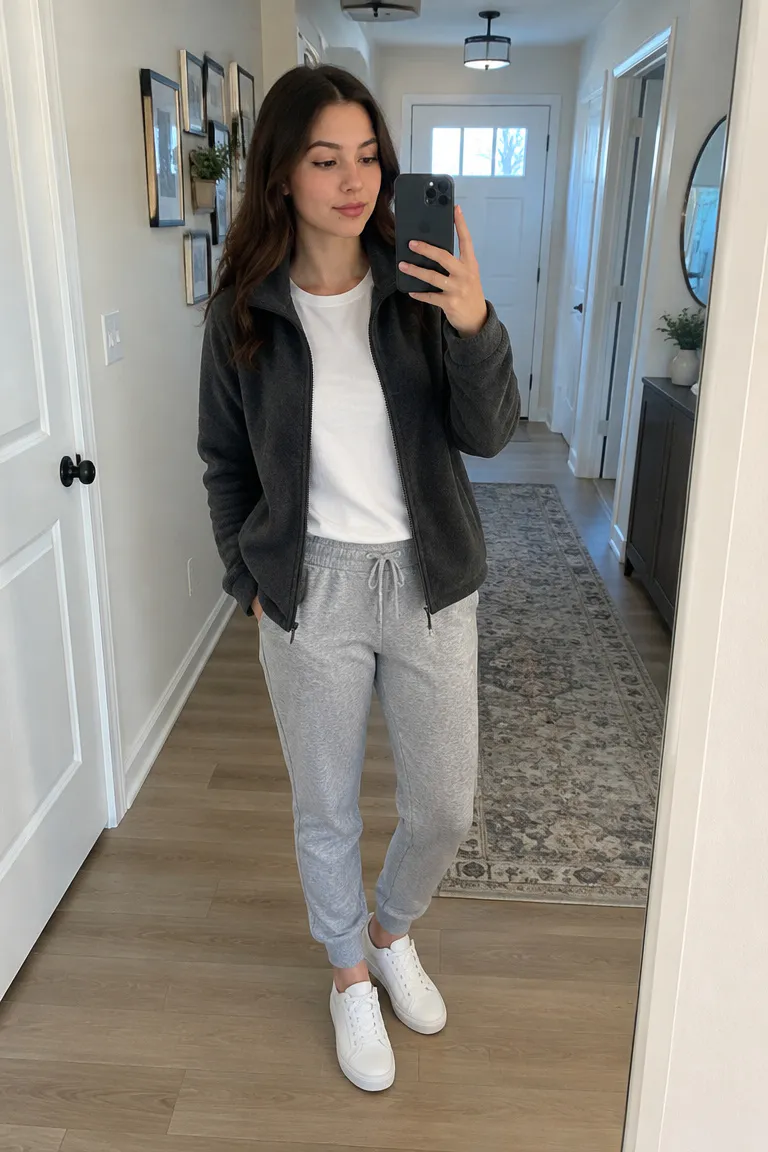
- Best for: Multi-stop road trips where the first hours are all driving and nothing technical happens until later.
- Wear it with: Soft stretch joggers or straight-leg knit pants, a breathable crewneck tee, a zip-front fleece or knit layer, and slip-resistant sneakers you’ve already broken in.
- Fit check: Sit in the pants with the seat belt buckled and check the waistband. It shouldn’t dig in at the stomach or ride down at the back. Make sure the hems clear your shoes and nothing bulky sits near the pedals.
- Weather swap: In heat, swap the joggers for loose, lightweight knit shorts and keep the zip layer on the passenger seat for a cold AC cabin.
Four or five hours in a seat changes what matters in pants. Seams and waistbands that feel fine standing up start to press once you’re belted in. Knit pants with a soft waistband solve most of that, and a plain crewneck tee keeps fabric from bunching under the seat belt.
Choose a zip-front outer layer so you can take it off with one hand at a gas pump or put it on at a cold rest stop. Wear sneakers with a thin, flat sole, because you can feel the pedals through them. If your trip also includes a flight, the same comfort rules show up in these airport outfits for long flights that stay comfortable.
- Rigid denim: seams and knees chafe after a few hours of sitting.
- Jumpsuits: every restroom stop becomes a full undress.
- Thick-soled hiking boots: they make pedal feel clumsy and add bulk near the brake.
2. Hot Sunny Trail Outfit
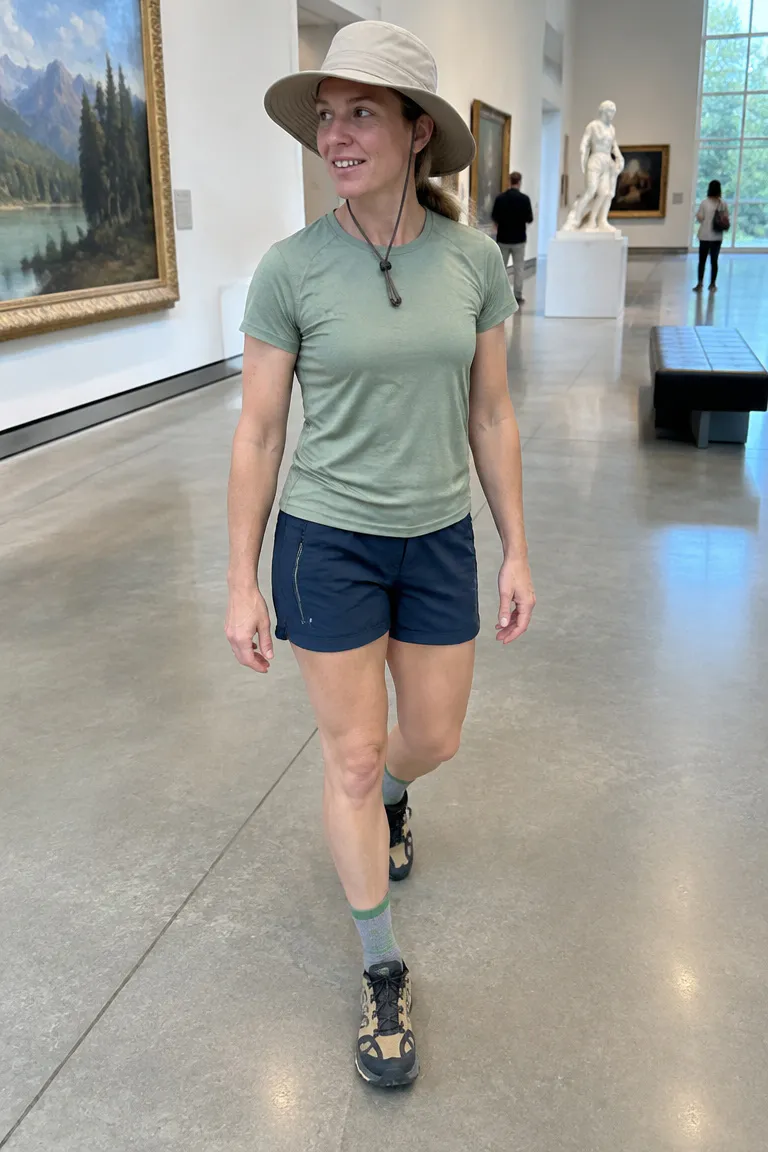
- Best for: Warm, exposed day hikes with little shade, such as open ridgelines or desert-style trails.
- Wear it with: A UPF-rated wicking tee, 2-in-1 or lined hiking shorts, wool or synthetic crew socks, trail runners or light hiking shoes, and a wide-brim hat.
- Fit check: Walk up a staircase or do a few deep lunges in the shorts. They shouldn’t creep up. Read the tag for polyester, nylon, or merino rather than cotton, and look for a UPF number if sun is a concern.
- Weather swap: If the forecast turns cool and windy, add a packable wind shell and swap the shorts for lightweight hiking pants.
On an exposed trail, the fabric tag matters more than the silhouette. A synthetic wicking top with a UPF rating can be your only layer all day. A cotton tank stays damp with sweat and gets heavier with every mile.
Lined or 2-in-1 shorts cut down on thigh rub, and they stay put better than loose gym shorts. Socks follow the same rule as the shirt: wool or synthetic, never cotton. A wide-brim hat covers your face, ears, and the back of your neck in a way a baseball cap doesn’t.
Tag check: Look for polyester, nylon, or merino on the label, and a UPF number if you’ll be in direct sun for hours. If the tag says mostly cotton, save the piece for the drive.
3. Warm-Water Raft Set
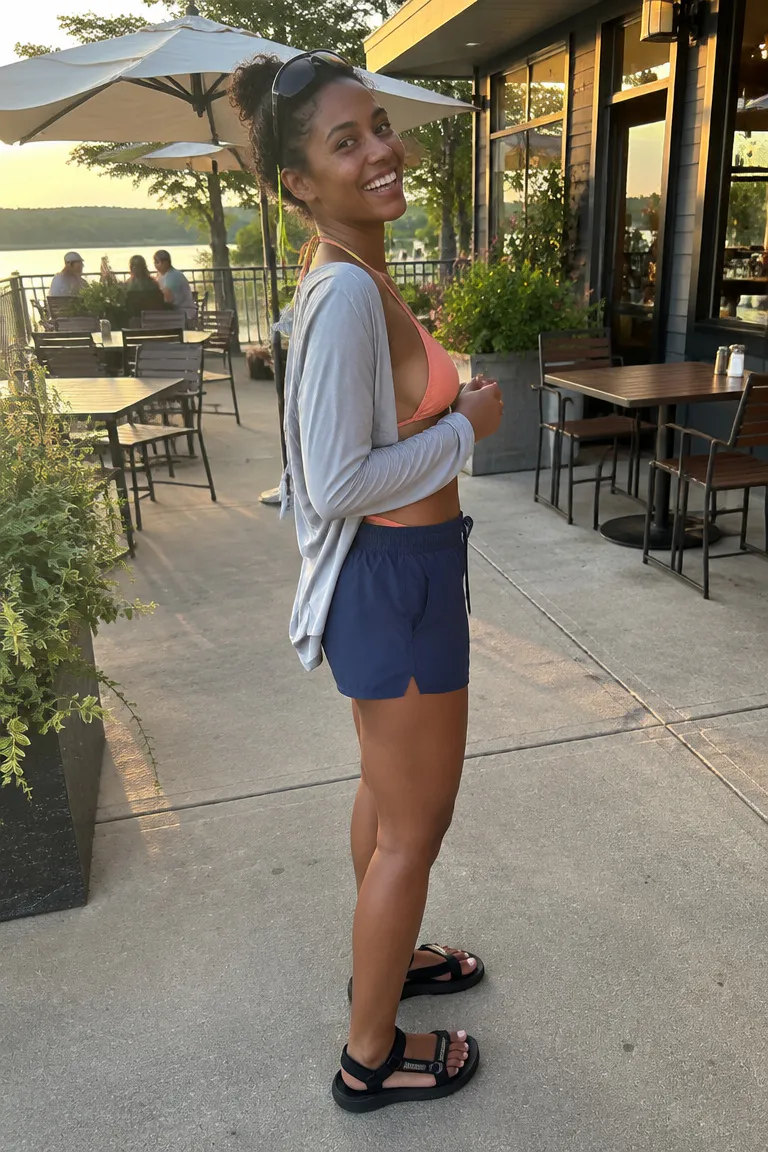
- Best for: Warm-weather rafting trips when the water is 70°F or above.
- Wear it with: A two-piece swimsuit or sports bra with quick-dry bottoms, a long-sleeve or short-sleeve sun shirt, quick-dry shorts, strapped river sandals or old sneakers, and sunglasses with a retention strap.
- Fit check: Check bra or bikini support by doing jumping jacks, since a life jacket sits over the top. Make sure shorts don’t ride up when you sit in a seated paddling position. Footwear must stay on if you swim, and flip-flops won’t.
- Weather swap: If clouds roll in or the water runs cooler than expected, put a splash jacket or fleece over the sun shirt.
REI uses 70°F water as the dividing line. At that temperature or warmer, a swimsuit or quick-dry bottoms plus a sun-protective top is usually enough. Anything cooler calls for the insulated setup in outfit 7.
Bathroom logistics should drive the suit choice. A two-piece, or a sports bra with underwear, is easier on a river trip than a one-piece, which has to come off completely. Many river stops are behind a bush or a boulder, so fewer steps help.
Footwear is the piece people get wrong most often. Flip-flops come off in the first swim, so choose sandals with a heel strap or old sneakers that drain. A retention strap on sunglasses keeps them from sinking in a rapid.
4. Convertible Pants Hiking Day
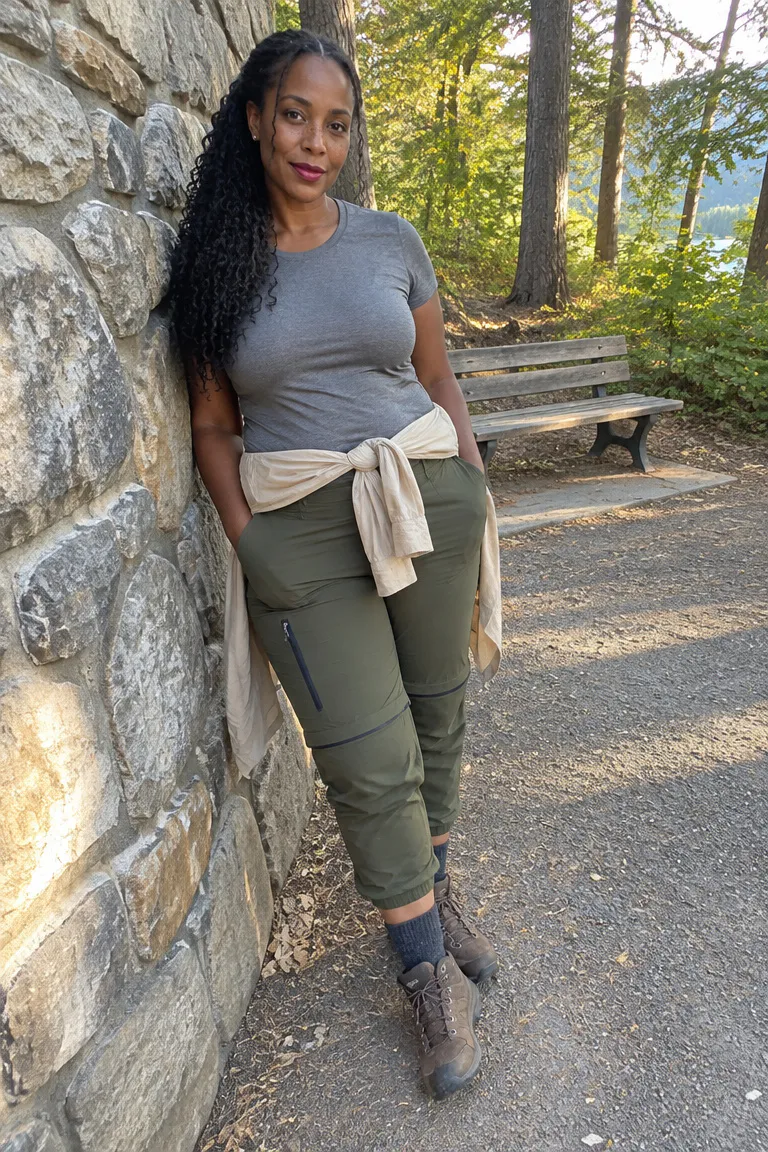
- Best for: Variable-temperature hikes where you’d otherwise carry both pants and shorts.
- Wear it with: Zip-off or roll-tab hiking pants with cargo or thigh pockets, a wicking tee, a lightweight long-sleeve layer tied at the waist or stowed in a pack, and wool or synthetic socks.
- Fit check: Put your phone in the pockets and walk. Pockets that dig or bounce are in the wrong place. Wear a loaded pack to check that the waistband lies flat under the hip belt and the zippers don’t press on skin.
- Weather swap: If it rains, skip the zip-offs and wear them full length, since shorts leave wet legs exposed in cooler weather.
Zip-off pants make sense when a hike starts in the 40s and climbs into the 70s. You’ll carry one garment instead of two, which matters when the daypack is already full. You don’t need a premium brand to get them, since several budget-friendly retailers sell hiking pants too.
Use the details below to judge price against quality before you commit.
| Detail | What to look for |
|---|---|
| Fabric tag | Nylon or polyester with some stretch; skip heavy cotton blends |
| Pocket depth | Deep enough to hold a phone without it bouncing |
| Waistband | Flat and soft where a pack hip belt will sit |
| Zippers | Covered or flat at the knee so they don’t rub skin |
5. Put-In Drive Outfit
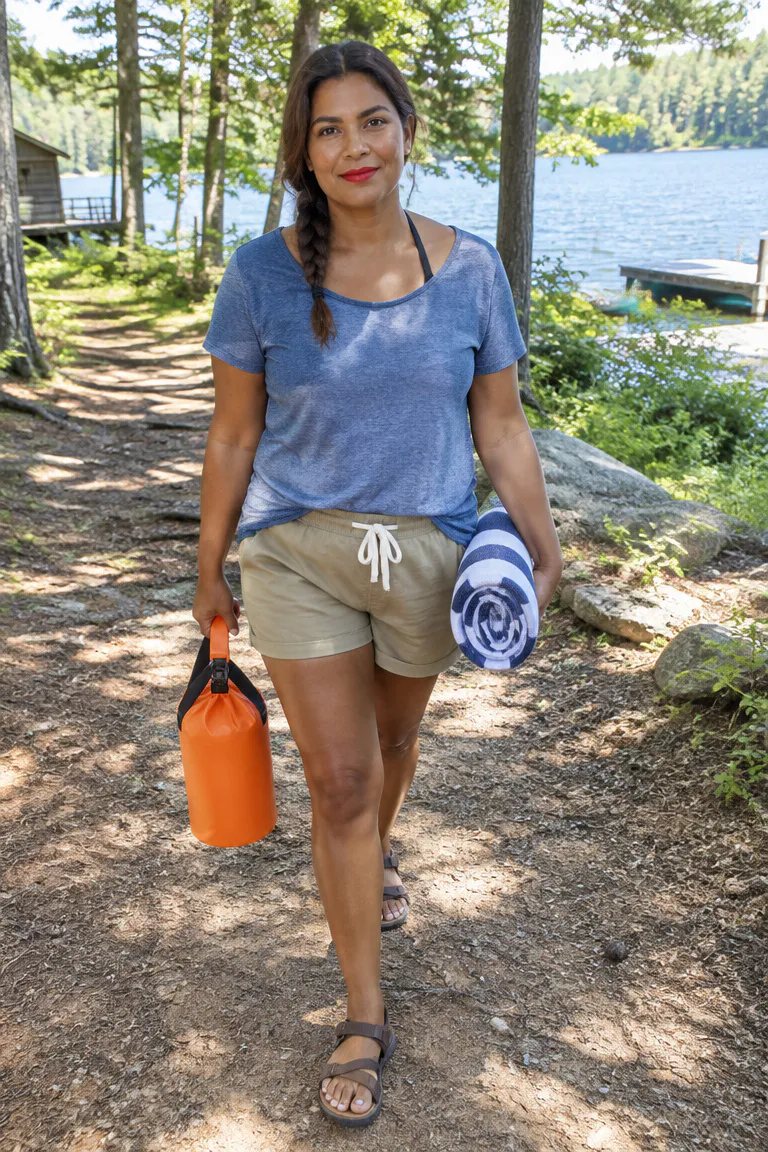
- Best for: Day trips where the drive ends at a river put-in and you’ll be wet by the afternoon.
- Wear it with: A swimsuit or sports bra under a loose cotton tee and soft shorts, plus slip-on sandals or old sneakers. Pack a towel, a dry bag, and a separate dry outfit in the car.
- Fit check: Make sure whatever you wear under road clothes doesn’t bunch or dig after hours of sitting. Cotton is fine in the car, and it becomes a problem only once you’re on the water.
- Weather swap: On a cooler day, put the long-sleeve layer in your daypack and keep a fleece for the car ride home.
Treat the drive as a handoff between dry and wet. Put your river layer on first, then cover it with easy road clothes you can strip off at the put-in. Cotton is fine in the car and only becomes a problem once you’re on the water.
- Lay a towel on the driver’s seat before you sit down in a wet suit afterward.
- Pack a dry bag for the damp gear you’ll peel off at the end of the day.
- Leave a complete dry outfit, underwear and socks included, in the car.
Pick a suit that won’t bunch after hours of sitting. Test it in the driveway rather than finding out at mile 90.
6. Shoulder-Season Shell Layers
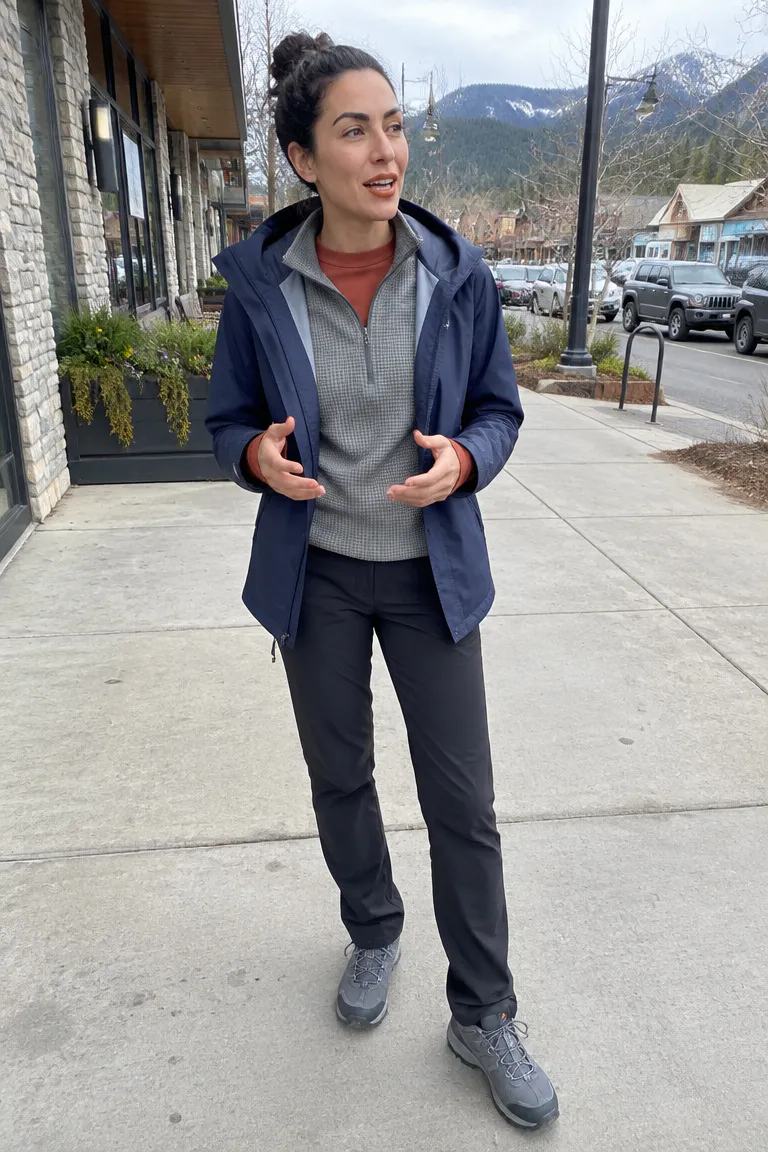
- Best for: Spring and fall hikes with chilly starts, warm climbs, and a chance of wind or rain.
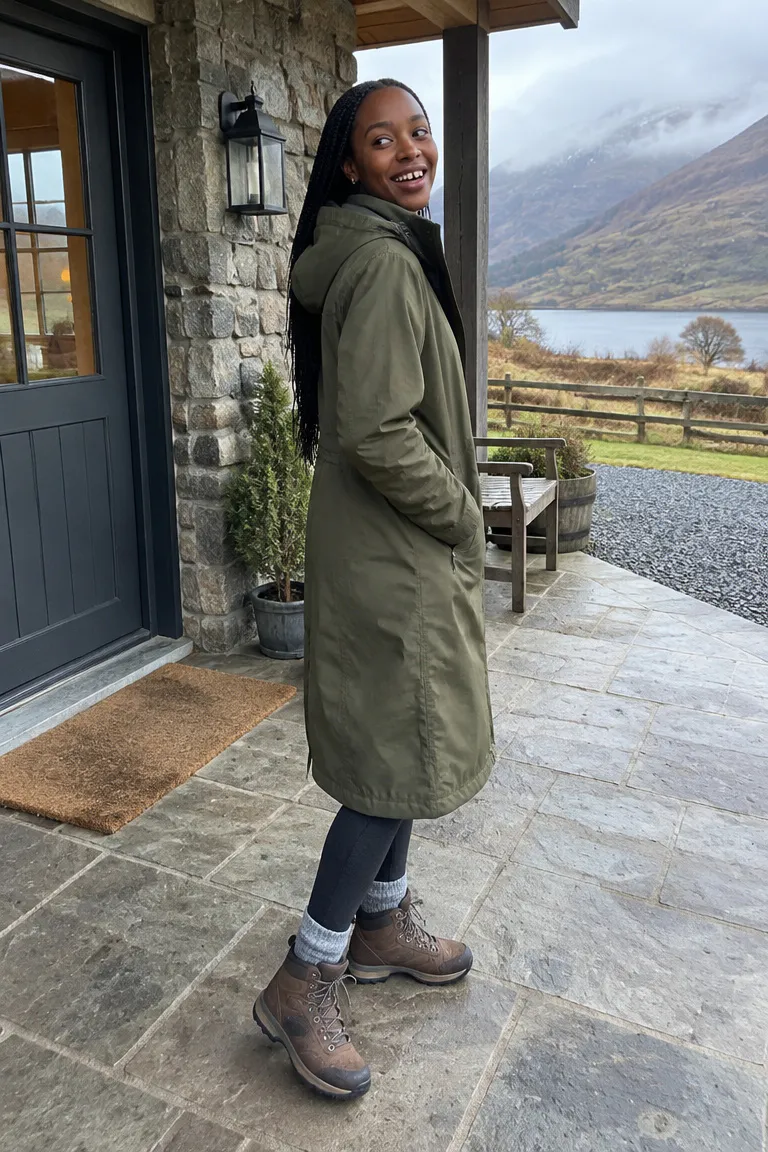
- Wear it with: A synthetic or merino long-sleeve base, a lightweight fleece or grid mid-layer, a packable waterproof shell with a hood, hiking pants, and wool socks with waterproof or water-resistant trail shoes.
- Fit check: Put on all three layers and raise your arms overhead. The shell sleeves shouldn’t pull up your wrists. The shell should fit over the fleece without squeezing it flat.
- Weather swap: In a warm stretch, drop the fleece and wear the base layer and shell. If it’s dry, leave the shell in the pack.
Spring and fall hikes can start cold, warm up on the climb, and turn windy at the top. A base layer, a mid-layer, and a shell let you add or shed pieces as your effort changes. A single heavy parka can’t do that, and it’s bulky to carry once you warm up.
- Base: synthetic or merino long-sleeve that sits close to the skin.
- Mid: lightweight fleece or grid fleece that traps warmth without bulk.
- Shell: hooded and packable, so it fits in the daypack when the sky clears.
Pack-down test: Stuff each layer into your daypack before you leave. If a piece takes up half the bag, it’s too thick for this system.
7. Cool-Water Raft Layers
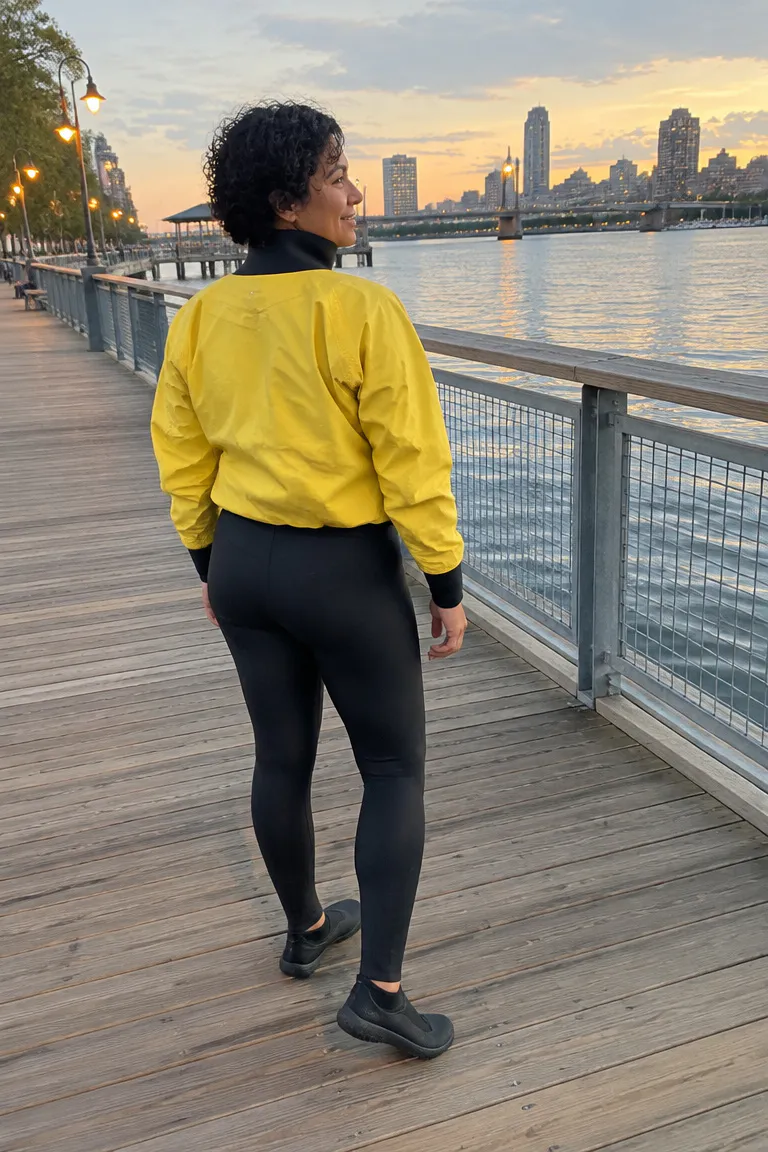
- Best for: Spring and fall river days, or any trip where the water is cooler than 70°F.
- Wear it with: A synthetic base layer or long-john set, a fleece mid-layer, a splash jacket or an outfitter-provided wetsuit, quick-dry leggings, and neoprene socks with river shoes or old sneakers that drain.
- Fit check: Bottoms shouldn’t ride up or pinch under a wetsuit. Do a squat in them first. Choose opaque leggings, since light fabric can go see-through when wet.
- Weather swap: If the day warms up, remove the fleece and keep the splash jacket as a wind and water barrier.
Below 70°F, or when the forecast is changeable, add insulation. Fleece layers, a wetsuit, or splash pants all work, and many outfitters will provide a wetsuit if you ask. Call before you buy one.
A splash jacket has sealed neck and wrist gussets and no hood. It keeps river spray out, but it won’t help much in a downpour, so pack a rain shell separately if the forecast calls for one.
Choose opaque leggings, since light-colored fabric can turn see-through when wet. Neoprene socks inside river shoes or old sneakers keep your feet warmer once water gets in.
8. Short Trail Stop Outfit
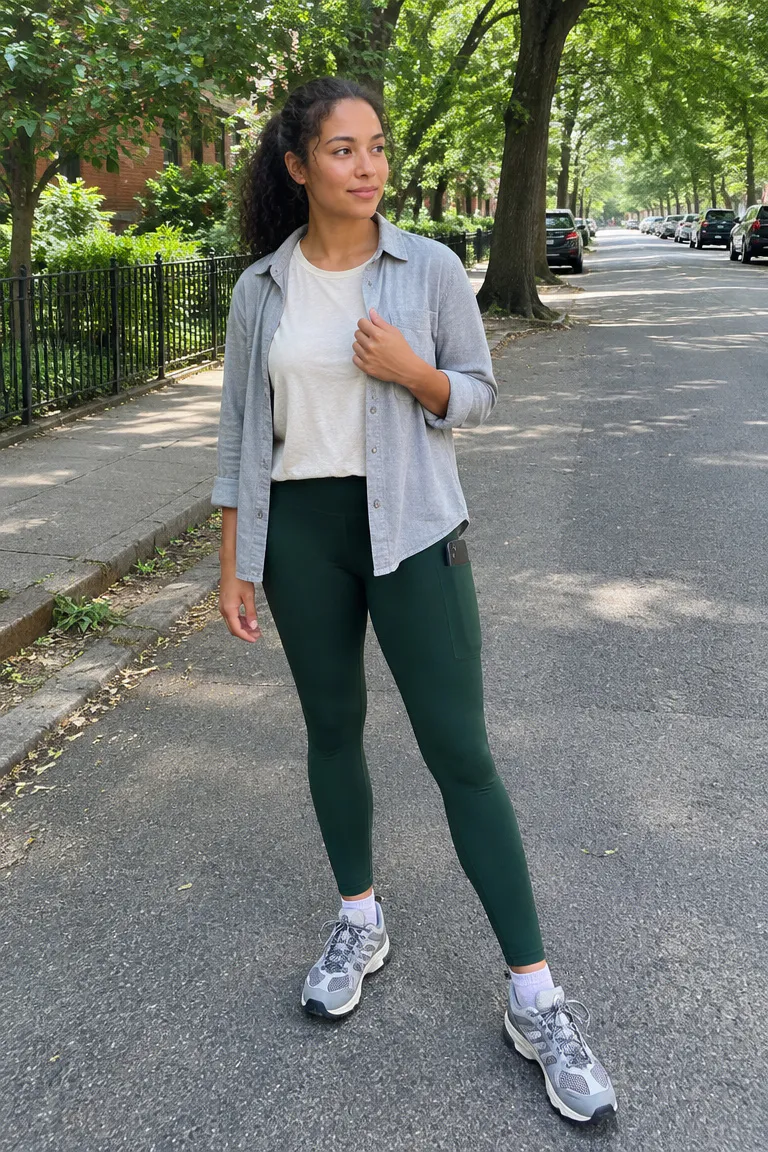
- Best for: A lookout or waterfall walk of an hour or less on a day dominated by driving.
- Wear it with: Opaque pocket leggings, a loose breathable tee, a light overshirt or zip layer, broken-in trail runners or supportive walking sneakers, and ankle socks in synthetic or wool blends.
- Fit check: Bend into a deep squat in daylight to confirm the leggings aren’t sheer. Test the phone pocket by walking briskly. A pocket that bounces will annoy you within a few minutes.
- Weather swap: On a hot day, switch to bike-length shorts with pockets, and on a wet trail wear shoes with a grippy sole.
A one-hour waterfall or lookout walk doesn’t deserve a full gear change. Pocket leggings and cushioned shoes work in the car and on the trail, so you can park, walk, and drive on. If leggings are your default for travel days, these leggings outfit ideas for travel show how to build more of them.
The shoe decision is the one that counts. Choose a pair that feels fine pressing a pedal and fine on uneven ground, and that you’ve already worn for several hours.
Pocket test: Walk briskly with your phone in the pocket before you leave home. If it bounces, it’ll bother you within minutes on a trail.
9. Long-Sleeve Sun Cover
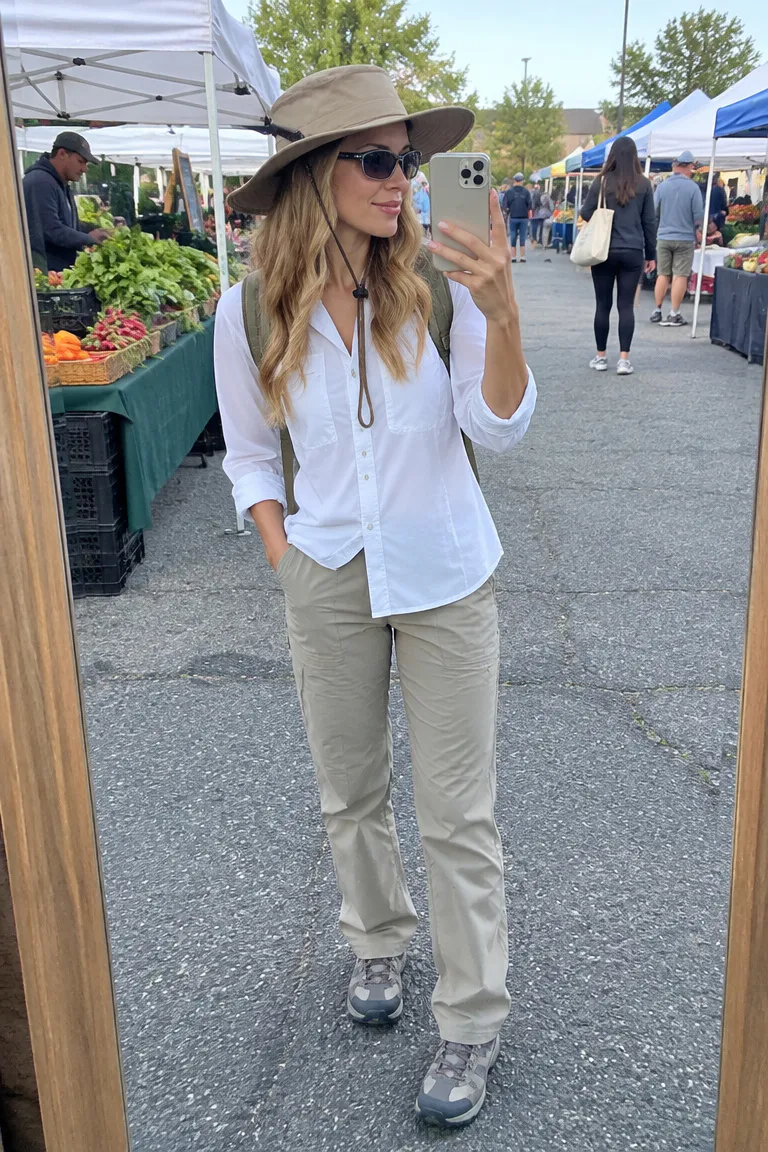
- Best for: Sunny, open-sky river days where shade is limited and you’d rather cover skin than keep reapplying.
- Wear it with: A loose UPF long-sleeve shirt, lightweight quick-dry pants, a wide-brim hat with a chin strap, sunglasses with a strap, and closed-toe or strapped water shoes.
- Fit check: Sleeves should reach the wrist when you reach forward and shouldn’t snag on a paddle grip. Pants should be loose enough to move in a seated paddle stroke without clinging when wet.
- Weather swap: If the heat is extreme, choose the lightest and most breathable weave. In cooler water, layer a fleece under a splash jacket.
One Arizona outfitter’s advice for sunny desert rivers is to cover up with long sleeves, pants, a wide-brim hat, and sunglasses, on top of sunscreen. That fits hot, exposed days with little shade. It isn’t a rule for every river.
The advantage is that fabric doesn’t wear off. You can skip reapplying sunscreen to your arms and legs every couple of hours. A loose UPF shirt also lets air move, which matters more than you’d expect at midday.
Strap check: Fasten the hat’s chin strap before the first rapid. A tan hat floating downstream is hard to retrieve.
10. Cold-Weather Trail Layers
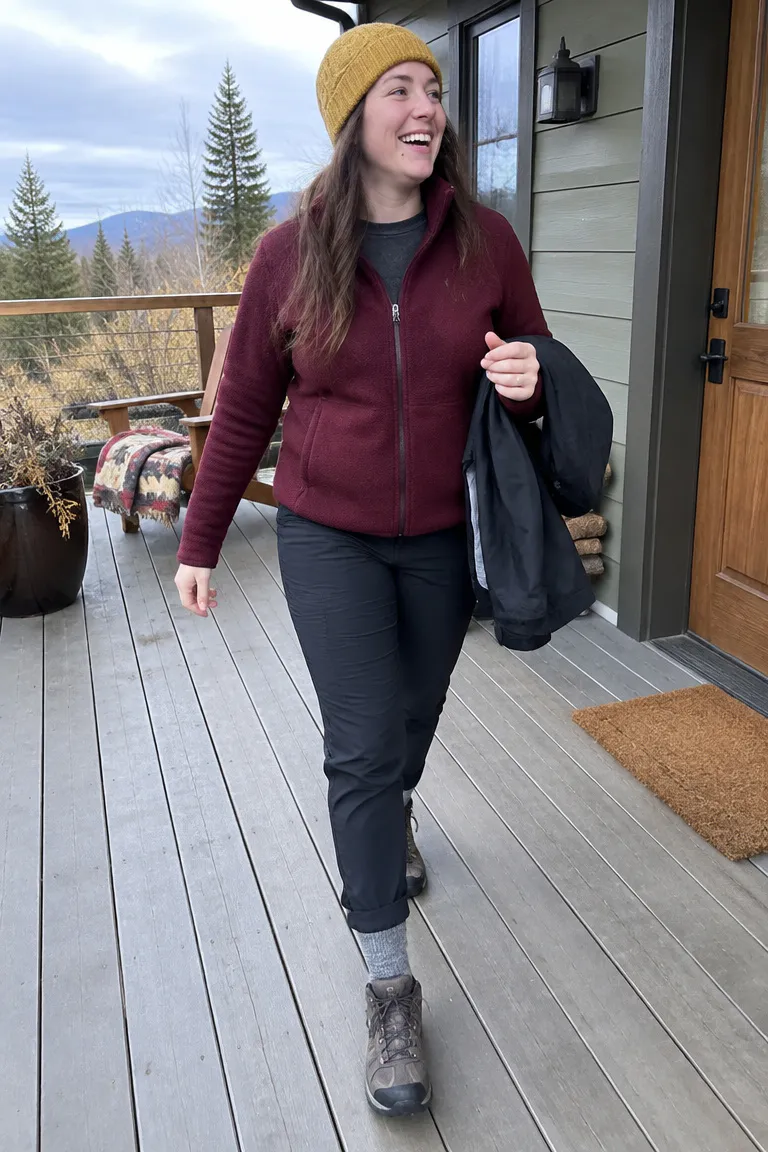
- Best for: Cold-weather hikes where sweat builds on climbs and chills at rest stops.
- Wear it with: A merino or synthetic sports bra and long-sleeve base, a fleece or lightweight insulated mid-layer, a wind-resistant shell, thermal-lined hiking pants, wool socks, a beanie, and gloves.
- Fit check: Check that the base layer lies flat under the pack straps without bunching. Try sitting and bending in the pants with all layers on, since stiff layers can limit your stride.
- Weather swap: On a mild day, take off the mid-layer and keep the base layer and shell. On a wet day, choose a hooded waterproof shell.
Sweat is what makes cold hikes uncomfortable. You warm up on the climb, then chill the moment you stop. Merino or synthetic fabric next to the skin moves moisture away, and that includes the sports bra, since a damp cotton one holds it against you.
- Merino or synthetic sports bra and long-sleeve base.
- Fleece or lightweight insulated mid-layer.
- Wind-resistant shell, hooded if rain is likely.
- Hat and gloves in a pocket you can reach without taking off your pack.
Keep each piece thin so you can adjust at rest stops. Four thin layers give you more control than one thick one.
11. Cool-Weather Drive Layers
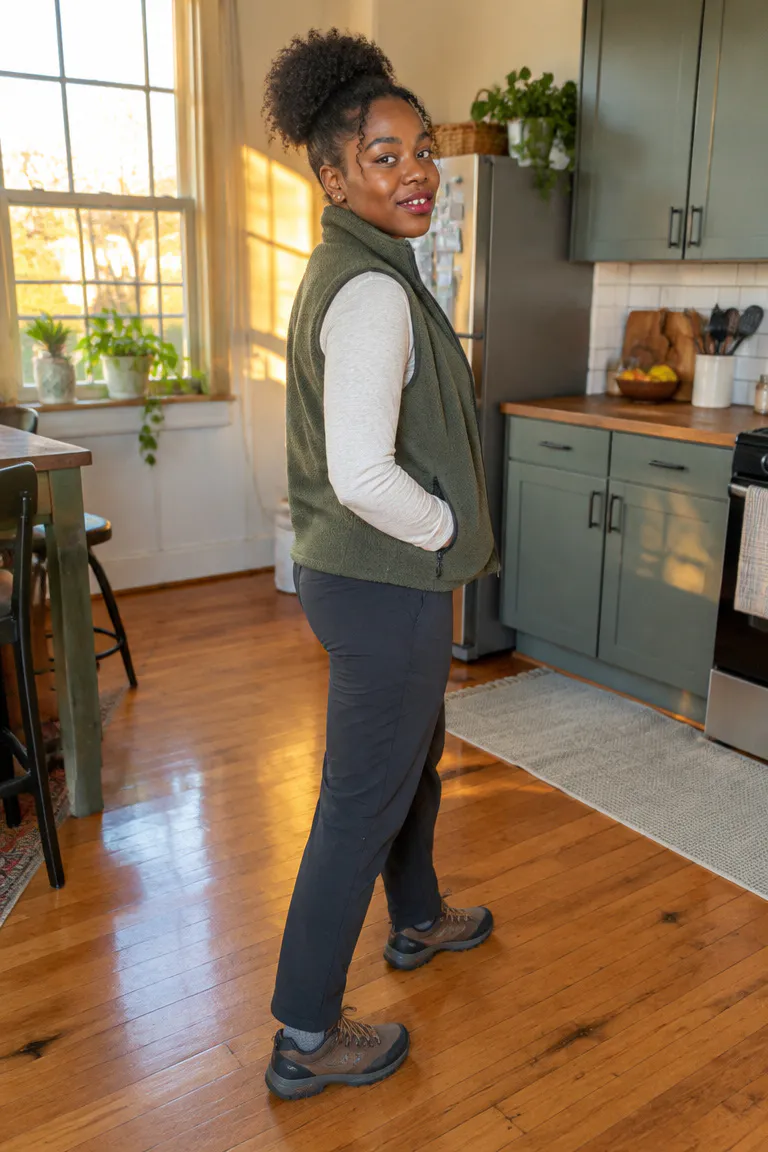
- Best for: Autumn or early-spring drives where the cabin and the stops are different temperatures.
- Wear it with: A soft long-sleeve tee, a zip-front cardigan or fleece vest, stretch pants with a flexible waistband, thin wool socks, and flat, broken-in shoes.
- Fit check: Test the front-zip layer while belted in. It should open without tangling the seat belt, and the sleeves should be roomy enough that you can steer comfortably.
- Weather swap: When it warms up, take off the outer layer and roll the sleeves of the tee. Pack a light scarf if the cabin stays cool.
A cold car cabin and a warm rest stop call for pieces you can remove without getting out. This is common-sense layering rather than anything tested, but it works best with a soft base and a layer that opens down the front. A fleece vest keeps your core warm while leaving your arms free to steer.
Autumn drives are where this setup gets the most use, and these fall airport outfits with comfortable layers use the same approach to temperature swings.
Roll the tee’s sleeves when the sun hits the windshield. Keep a light scarf nearby if the cabin stays cool.
12. Camp After-River Outfit
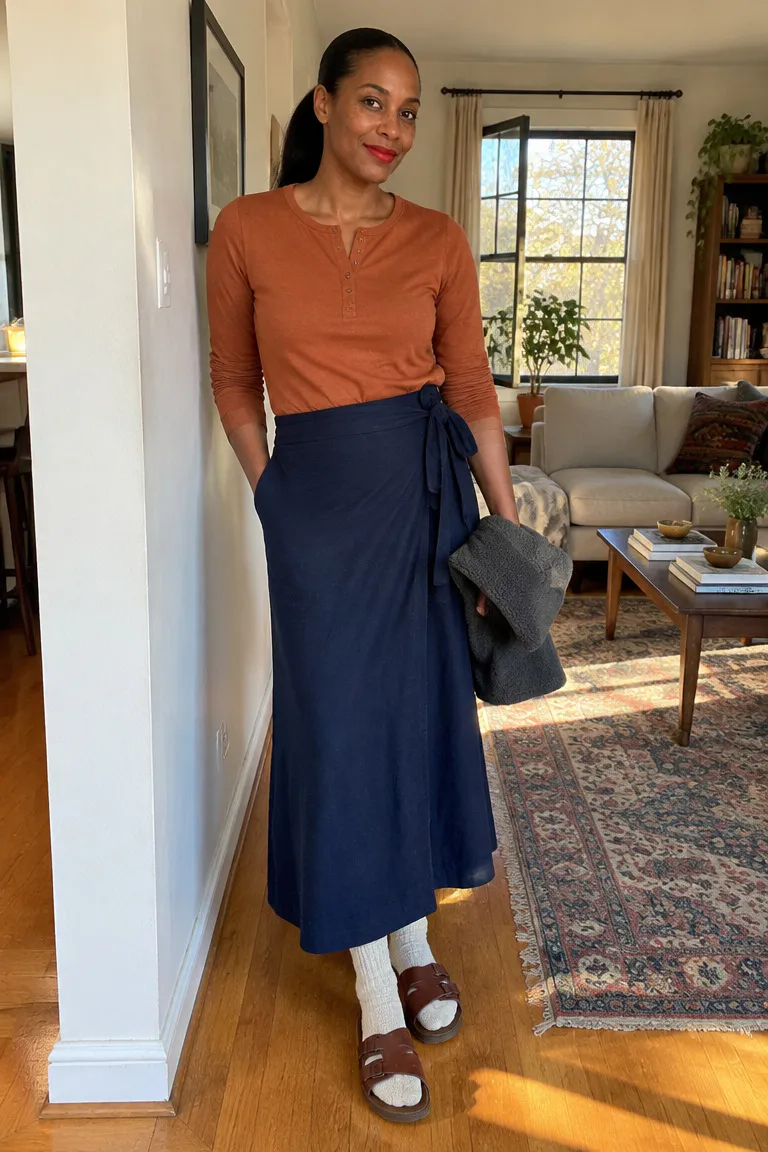
- Best for: Overnight or multi-day river trips where you change out of wet clothes at camp.
- Wear it with: A soft cotton tee or henley, a wrap skirt or loose dress, warm leggings or sweatpants, wool socks, closed camp shoes or sandals, and a warm layer such as a fleece or hoodie.
- Fit check: Choose a skirt with enough width and length to change under, and a waistband that doesn’t need hands to hold it up. Keep the camp set dry in a sealed dry bag.
- Weather swap: On a cold night, use leggings and a fleece, and on a warm one, a light dress or skirt with a tee and sandals.
On a multi-day trip, pack one set for the river and a separate set for camp. Cotton is fine at camp, which is why the rule is no cotton on the river rather than no cotton ever. Dry clothes at the end of a wet day are worth the weight.
A wrap skirt or loose dress is useful at camp for another reason, since it works as a changing cover. Pick one wide enough to step into and pull up under, with a waistband that doesn’t need a hand to hold it.
- Store the camp set in a sealed dry bag, separate from the river gear.
- Bring warm leggings or sweatpants for after sunset.
- Wear closed camp shoes or sandals with socks if the ground is cold.
13. Trailhead Drive Outfit
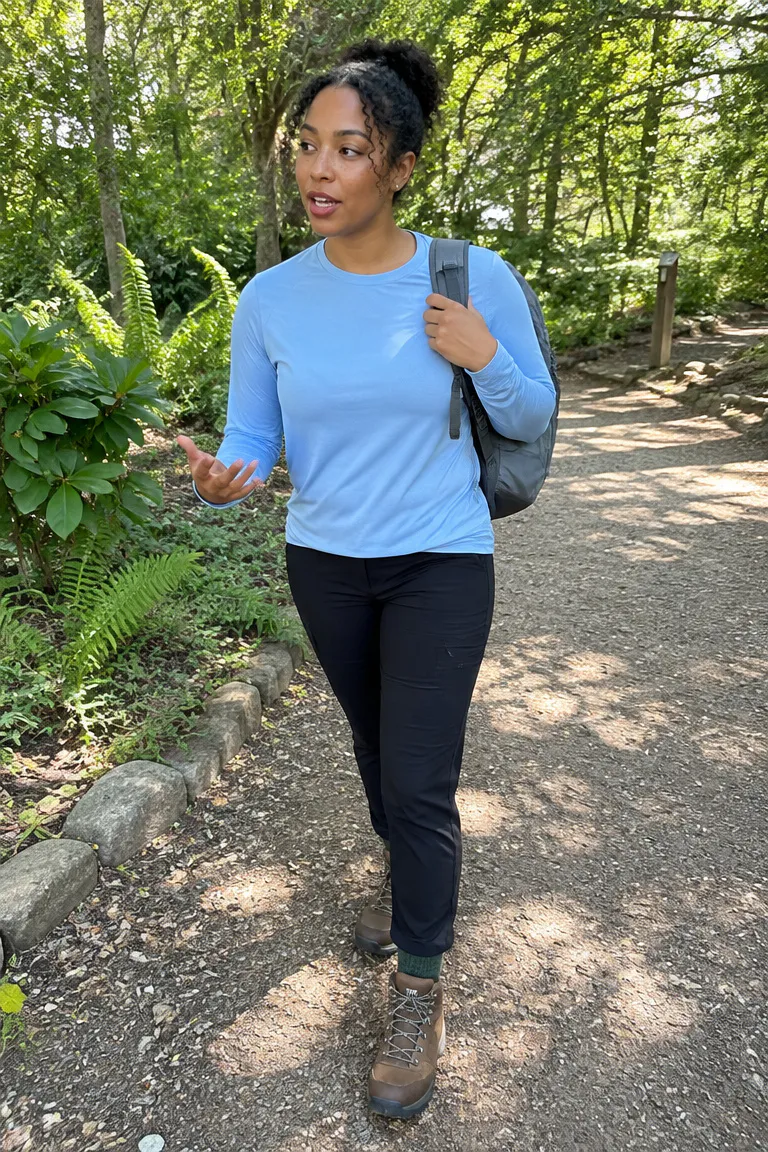
- Best for: A drive that ends at a trailhead, usually early in the morning before the day warms up.
- Wear it with: A wicking long-sleeve or tee, hiking pants with a stretchy waistband, a zip layer that can go into the pack, wool socks, and boots or trail shoes you carry in or wear in the car.
- Fit check: Boots can be bulky near the pedals, so keep them in a bag or wear flat trail shoes to drive and switch at the trailhead. Make sure the pants waistband won’t dig in on the drive or under the hip belt.
- Weather swap: If the morning is cold, leave a fleece or beanie on the seat. If it’s warm, wear shorts and keep long pants in the pack.
Dress for what you’ll do right after you park. If it’s a hike, wear the wicking base from the car and keep a zip layer within reach, since trailheads are often colder than the ride in. The goal is to step out, switch shoes, and walk without changing in a parking lot.
Hiking pants with a stretchy waistband work for both the drive and the hip belt. A stiff waistband gets old before you reach the trailhead.
Shoe check: Boots are bulky near the pedals. Carry them in a bag and wear flat trail shoes to drive, then switch at the trailhead.
Pack One Capsule For All Three
Build the capsule around three pieces that work in every setting: a synthetic or merino tee, quick-dry pants or shorts you can sit in, and a thin zip layer. Add one water-specific item, a sun shirt for warm rivers or a splash jacket for cool ones, plus a dry set for camp or the car in a sealed bag. Leave cotton for the drive and camp, and test everything in the car seat before you go.