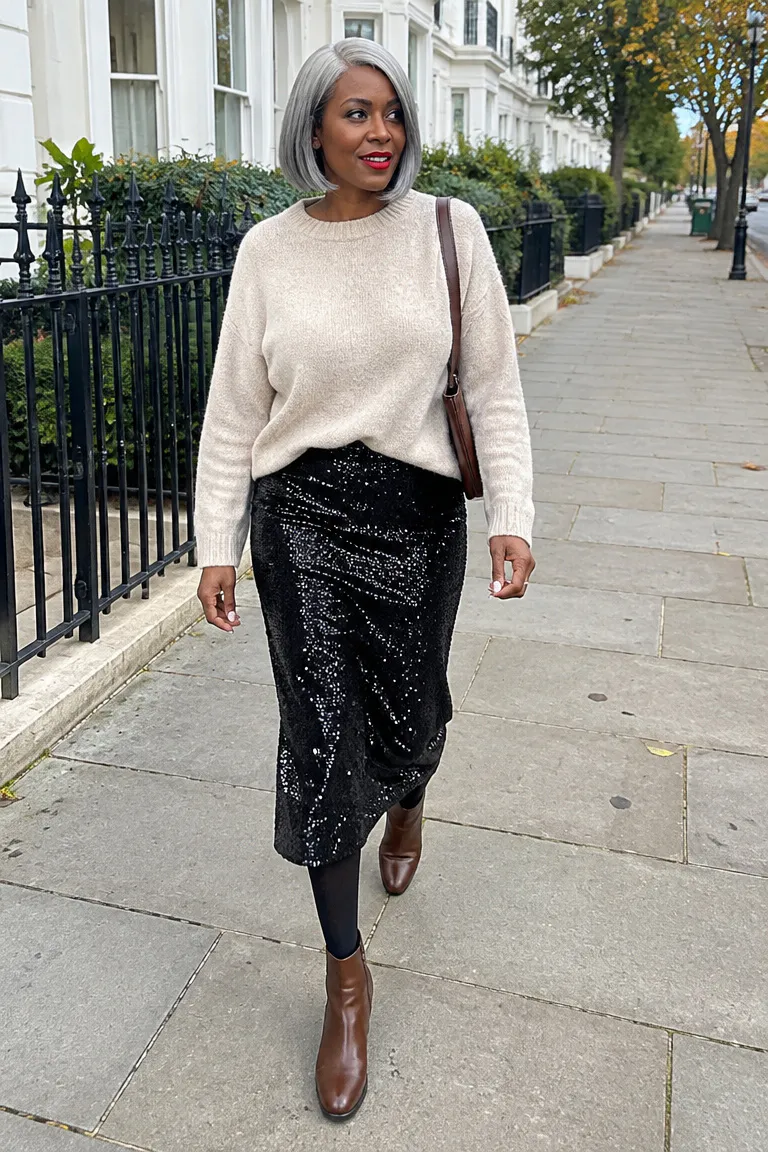
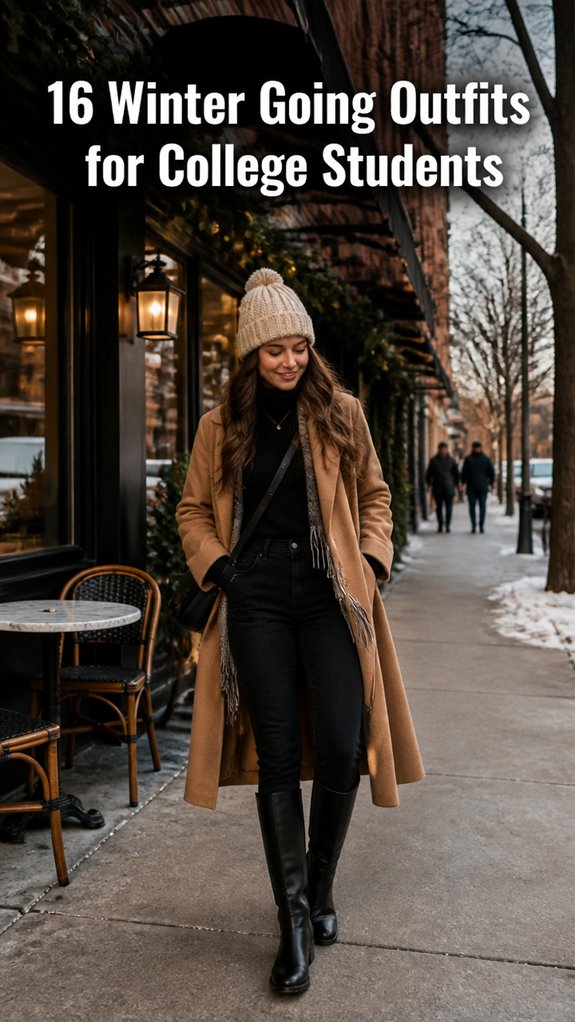
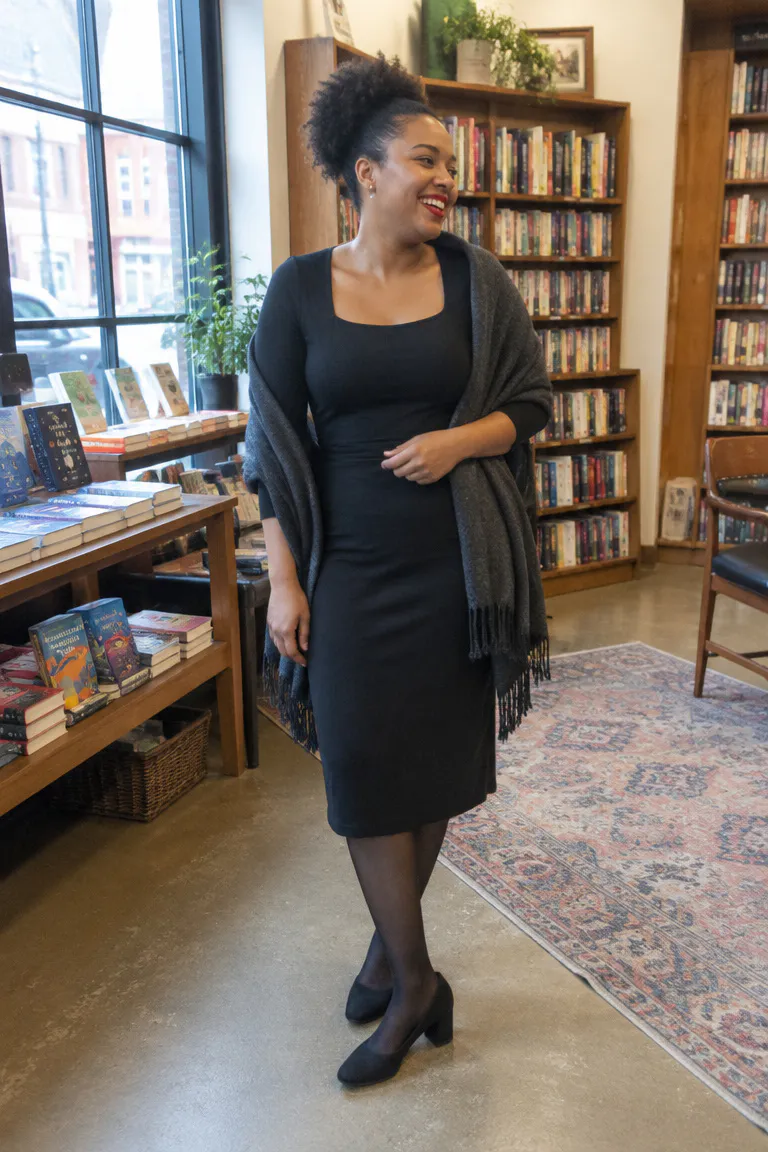
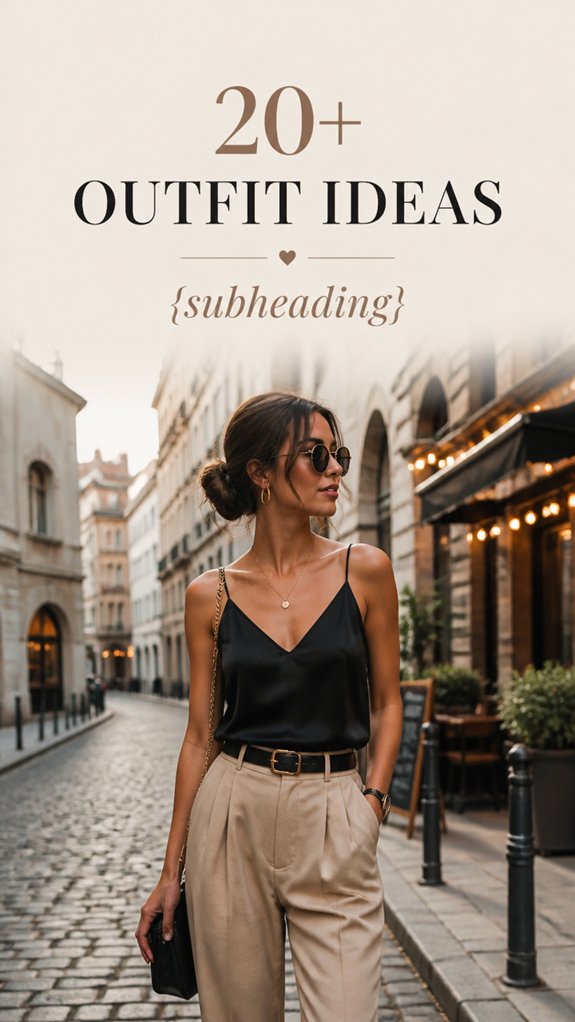
14 Christmas Market Outfits for Women That Stay Warm and Look Chic
Cold feet end a Christmas market visit faster than a thin coat does, because most of the evening is spent standing on stone or packed snow in a line for mulled wine or roasted nuts. Choose boots and socks first, then a coat that covers your seat. Try both over your thickest sweater, and if you can’t bend your elbows or wiggle your toes, go up a size.
From there you can match the outfit to the situation: a long wind-exposed line, slush, snow, a mild afternoon, dinner afterward, or a carry-on packing plan. Every look names the piece doing the warming and the one change to make when the forecast drops. Most of it works with ordinary closet pieces, and the budget route shows what’s worth buying new.
1. Insulated Lug-Sole Boots Outfit
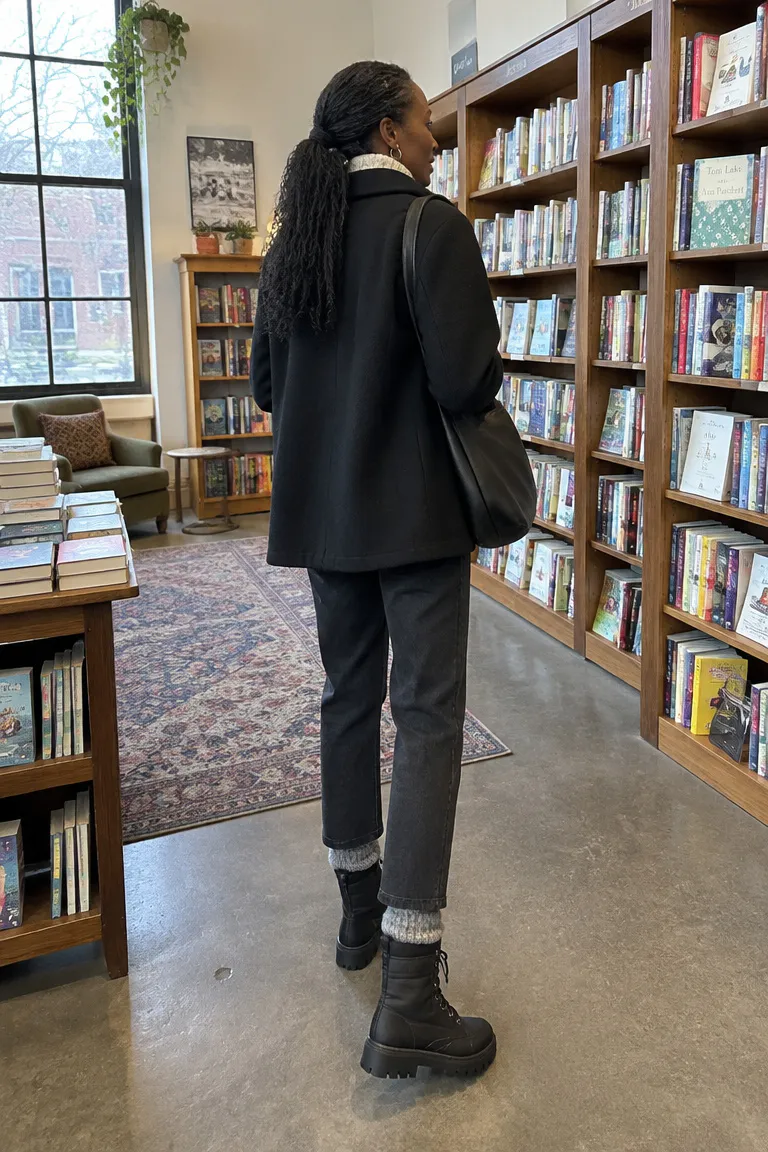
- Best for: Cold, dry days (roughly 25 to 40 F) when you’ll spend long stretches in line at one stall with a mug in hand.
- Wear it with: Wool or wool-blend socks (not cotton), dark thermal-lined jeans, a cream fisherman-knit sweater, and a hip-length black coat with zip pockets. A wool or fleece insole is an inexpensive add-on.
- Fit check: Try the boots with your thickest socks and leave a little toe room, because tight boots restrict circulation and feel colder. Break them in before the trip. Jeans should sit over the boot shaft without bunching at the ankle.
- Weather swap: If you run cold or the forecast drops below freezing, add fleece-lined leggings under the jeans and a thicker insole. If it turns to rain, spray the boots with a waterproofing product and check that the tongue is gusseted.
Standing still is what makes a market feel colder than a walk. Your feet sit on cold ground for twenty minutes at a time, and a thin leather sole passes that cold straight up. On wet cobblestones a smooth sole also slides, which is a bigger problem when you’re holding a hot mug.
A waterproof, lined boot with a lug sole handles both, and it sets up the rest of the outfit. With the boots sorted, jeans and a sweater are enough in the 25 to 40 F range. When you shop, check three things:
- Sole: thick and stiff enough that you can’t fold the boot in half by hand.
- Upper: sealed seams or a waterproof membrane, not just polished leather.
- Lining: shearling-style or fleece at the collar, plus a removable insole so you can swap in a wool or fleece one.
Wool-blend socks go inside. Cotton holds damp and feels cold once you stop moving.
2. Camel Coat and Cream Knit
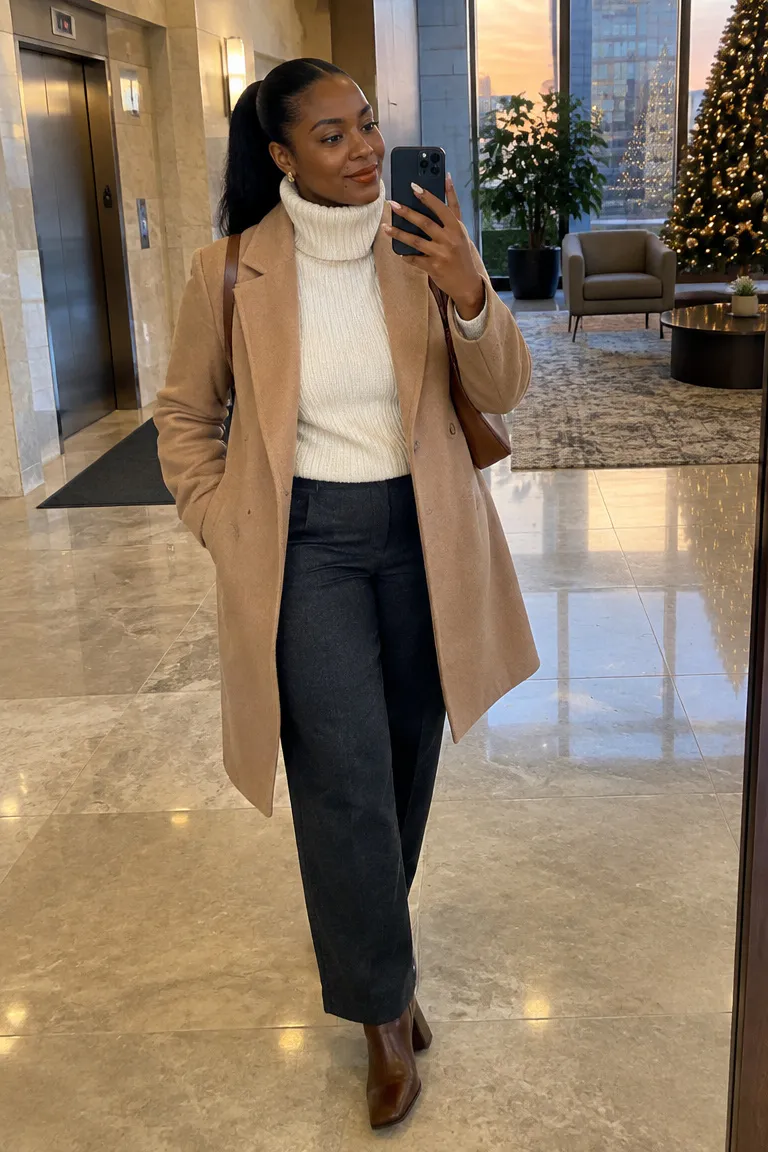
- Best for: Dry, cold afternoons with little wind, or anyone who wants a classic neutral look for photos at the market.
- Wear it with: A cream chunky turtleneck, charcoal trousers or dark jeans, ankle or mid-calf boots in brown or black, and a wool scarf in a deeper shade of camel or burgundy.
- Fit check: Put the coat on over your thickest sweater before buying: sleeves should still reach the wrist bone and the shoulders shouldn’t pull when you reach forward. Check the label or lining, since some wool coats look warm but have no insulation behind the outer fabric.
- Weather swap: Plain wool soaks through in rain or wet snow. On damp days, switch to a water-resistant coat in the same camel tone or carry a compact umbrella, and remember it takes one hand.
This is the most repeated market formula, and it works because the coat hangs open in photos. That puts the knit underneath on display, so it needs to look chosen. A chunky ribbed turtleneck fills the open front, and keeping the palette to camel, cream, and charcoal means nothing competes.
Sleeve length does more than most people expect. A sleeve that reaches the wrist bone shows a sliver of knit cuff and closes the gap above your gloves. Let the scarf be the one deeper shade, burgundy or a darker camel, so the outfit has depth without another piece.
Lining decides whether the coat is warm or only looks it. Wool with no quilted or fleece lining blocks wind but holds little heat, so on a dry 35 F afternoon the turtleneck is doing most of the work.
3. Teddy Coat With Dark Jeans
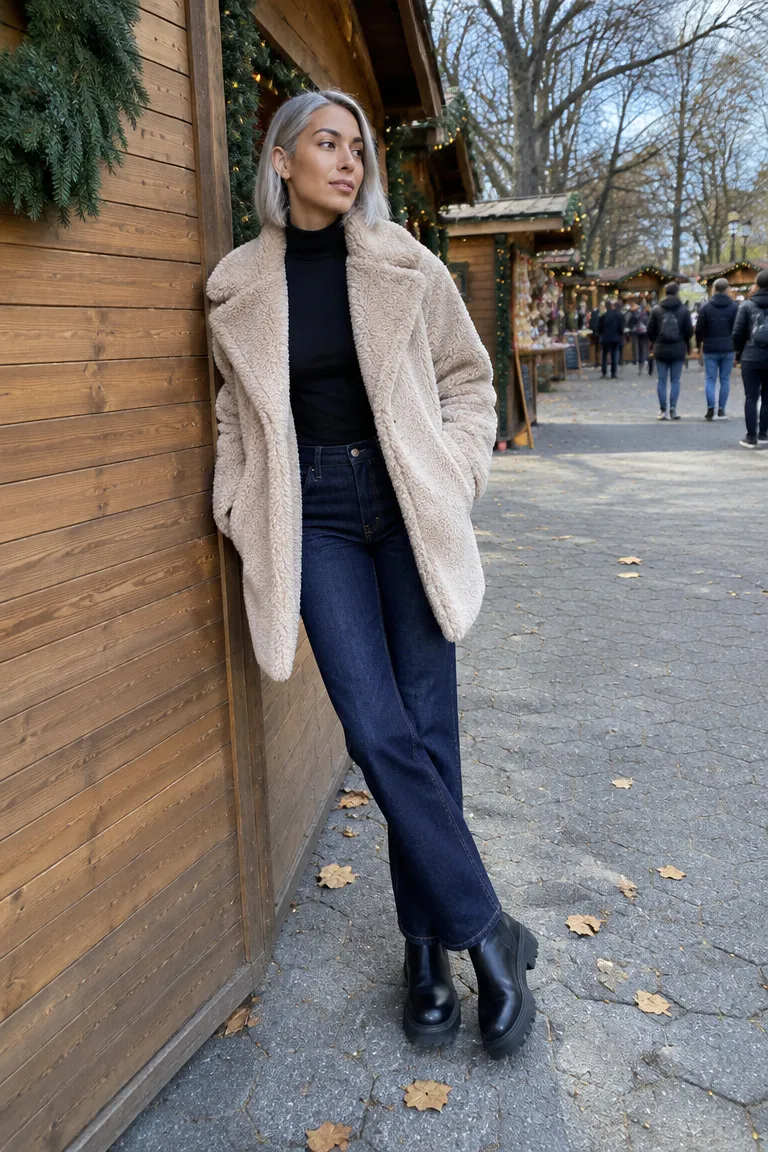
- Best for: Cold evenings for a statement coat when you’re walking between stalls more than standing.
- Wear it with: Dark straight-leg jeans, a fitted black mock-neck as a base that doesn’t show a bulky neckline, and black lug-sole boots. Keep the bag small and cross-body so the coat’s texture isn’t crushed.
- Fit check: Teddy fabric adds volume, so size by how it sits over a sweater, not by the label. A hip- to mid-thigh length covers your seat from wind. Check the inside for a lining and try sitting down in it, because stiff fabrics can ride up.
- Weather swap: Faux fur holds water and flattens in sleet. If it’s wet, wear a hood or waterproof shell over it, or save this coat for a dry evening and switch to a hooded option on rainy days.
Texture carries this outfit, so everything else stays plain: a black mock-neck, dark straight-leg jeans, black boots. The fuzzy coat is the only thing anyone notices.
Some teddy coats are decorative, though. Pinch the coat at the chest between your thumb and fingers. If you feel only a thin knit backing and the pile, it will cut a little wind and add little warmth, while a warm one has a thick lining, a quilted layer, or real weight on the hanger.
Pick a base that sits flat under the wide collar. A mock-neck does; a cowl or crew neck bunches. Carry a small crossbody instead of a tote, since a strap or shopping bag rubbing the pile leaves a flattened patch.
4. Belted Hooded Puffer
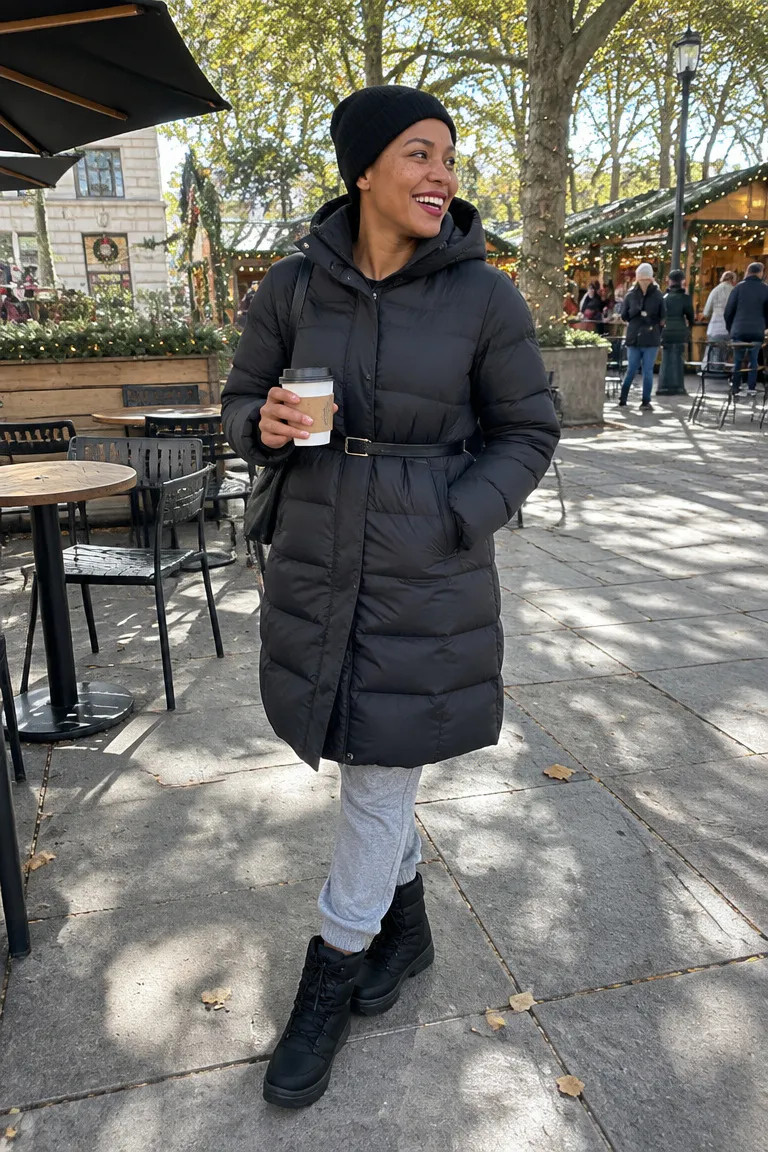
- Best for: Windy, exposed spots like open plazas, where wind chill matters more than the number on the forecast.
- Wear it with: A thermal base layer, a fleece or merino mid-layer, straight-leg joggers or thermal-lined jeans, and insulated boots. A matching knit beanie keeps the look cohesive.
- Fit check: Pick a puffer that reaches mid-thigh and has zip pockets. Place the belt at your natural waist over the coat and cinch only until the fabric stops ballooning. Check that the hood fits over a hat if you wear both.
- Weather swap: Below about 25 F or with strong wind, add a neck gaiter under the collar. If you overheat in tents, unbelt and unzip the front instead of removing the coat.
At an open plaza, wind chill is the number that matters, and a hooded puffer is the most direct answer. The hood closes off the neck, the tightly woven shell stops wind that would pass through knit stitches, and the baffles hold the heat. The outer layer matters more here than how thick the sweater underneath is.
Puffers can look shapeless, and the belt fixes that. Use a slim leather or woven belt rather than a chunky one, so the waist shows without adding bulk. A beanie in the coat’s color finishes the look under the hood.
Quick tip: Layer thin to thick under the puffer: a thermal base first, then fleece or merino. In a heated tent, loosen the belt and open the zipper before taking the coat off, since a bulky coat is hard to get back on in a crowd.
5. Midi Skirt With Thermal Tights
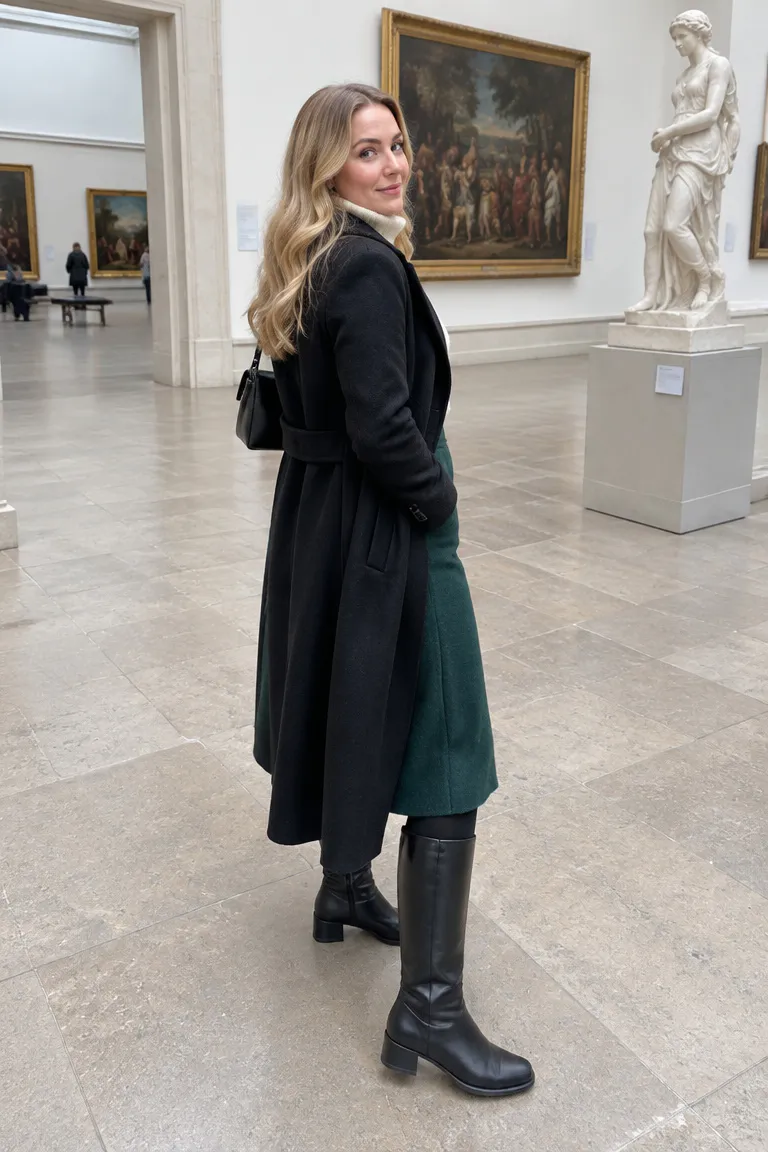
- Best for: Skirt and dress wearers heading to a market in cold-but-dry weather who want to keep the silhouette.
- Wear it with: A wool or heavy knit midi skirt, opaque fleece-lined tights, knee-high or tall insulated boots, a turtleneck, and a coat that reaches the knee.
- Fit check: Tights should sit at the waist without rolling down; try them with the skirt before you leave. The gap between skirt hem and boot top should be covered by the tights, with no bare skin showing in wind. A knee-length coat covers the transition.
- Weather swap: If you run cold, add a pair of thin leggings under the tights. In snow or sleet, switch to tall waterproof boots and a skirt in a heavier knit, not a thin satin one.
A skirt works in the cold when three things are in place: opaque fleece-lined tights, tall boots, and a coat that reaches the knee. The tights do the warming. Their brushed interior traps air against your legs, while regular leggings are thin jersey that can stretch sheer at the knee.
The skirt’s fabric weight matters too. A wool or heavy knit midi hangs straight and stays down in a gust. A thin satin or chiffon skirt flaps, clings to tights with static, and adds no insulation.
Tall boots and a knee-length coat close the gaps where wind finds your legs. Keep the colors close, such as forest green, black, and cream, so the tights read as part of the outfit instead of a separate layer.
6. Wool Trousers Over Thermal Base
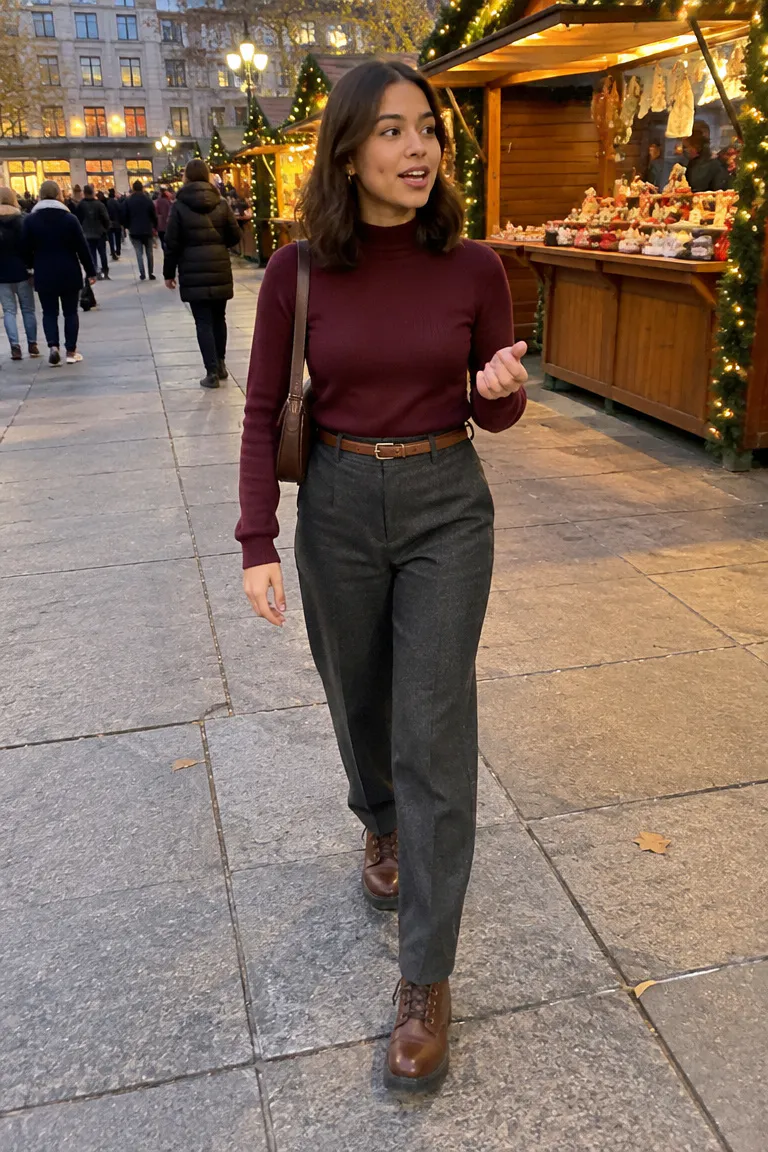
- Best for: Very cold, dry days when jeans feel too thin and you want a smarter look than athleisure.
- Wear it with: High-waisted wool trousers or wide-wale corduroy, a thermal legging underneath, a tucked mock-neck sweater, a belt, and sturdy leather boots with tread.
- Fit check: Buy trousers a size looser through the thigh so the thermal layer doesn’t pull the fabric tight. Hems should clear the boot top and not drag in slush. A belt placement at the natural waist keeps layered bulk from collecting at the midsection.
- Weather swap: If wet, choose a water-resistant coat and boots with a rubber-lined sole because wool trousers soak up moisture at the hem. In milder weather, skip the thermal layer and keep the trousers.
Jeans often fail in freezing weather. Denim is thin, cold to the touch, and slow to warm up again once it gets damp. Wool or wide-wale corduroy traps more air, and over a thermal legging the outfit still looks like regular clothes.
| Trouser fabric | What it does | Watch for |
|---|---|---|
| Dark denim | Fine above freezing with a thermal layer under it | Turns cold and heavy when the hem gets wet |
| Wool trousers | Trap the most air and hold their shape over leggings | Hems soak up slush, so they need to clear the boot |
| Wide-wale corduroy | Thicker than denim with a softer drape | Fine-wale cord runs thin and isn’t much warmer than jeans |
Tuck a mock-neck into the waistband and add a belt. The thermal layer adds bulk, and the belt gives the waist a clear line.
7. Waterproof Shell for Slush
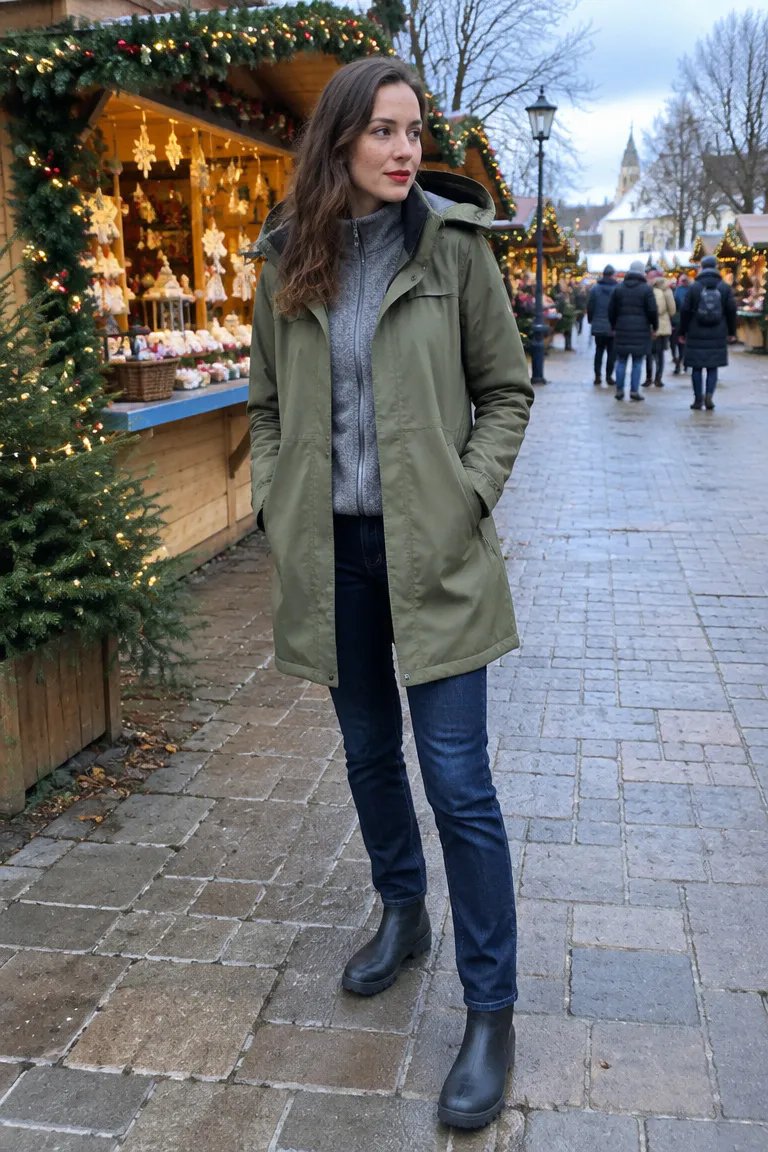
- Best for: Mild and damp days (roughly 40s to 50s F) with rain or slush, or any market where you can’t count on dry weather.
- Wear it with: A hooded waterproof parka or shell, a fleece mid-layer you can zip away indoors, water-resistant boots, and dark jeans or quick-dry trousers that won’t hold water.
- Fit check: The hood should stay up without blocking side vision, and the cuffs should seal around gloves. A shell cut long enough to cover the seat keeps jeans from soaking. Test pockets for zippers so a phone stays dry.
- Weather swap: If the temperature drops, layer a thicker fleece under the shell instead of switching coats. If you’d rather use an umbrella, pick a compact one and plan for one free hand fewer when holding a mug.
Several European markets see rain or slush as often as snow, and a hooded waterproof layer changes what goes under it. A shell blocks water but insulates very little, so a fleece mid-layer does the heat work and zips away when you step into a heated tent or restaurant. Quick-dry trousers shed water and dry faster than jeans, though dark jeans are fine for a short visit.
An umbrella costs you a hand, and at a market both hands are usually busy with a mug and a pastry or shopping bag. A hood keeps them free, which is the main reason to pick a shell.
For more rain-ready combinations built around leggings, these black leggings outfits for rainy days pair storm-ready outerwear with grippy shoes.
8. Full Layers for Snow
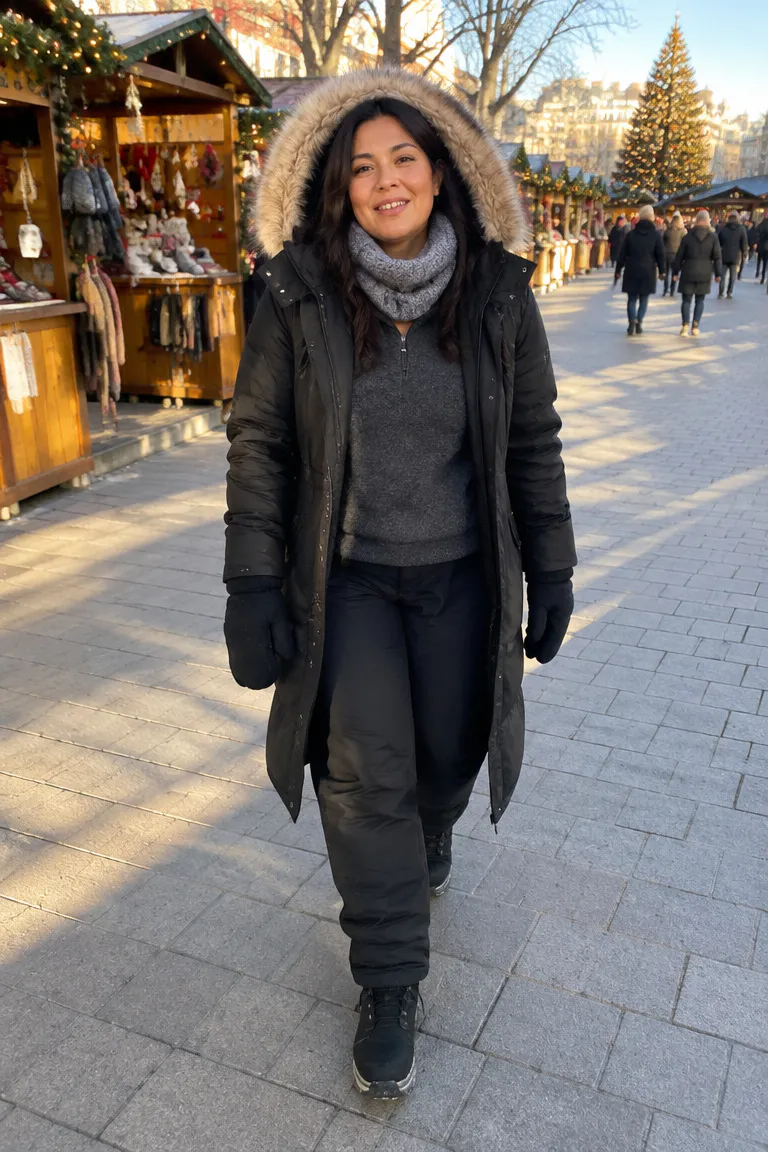
- Best for: Freezing, windy, or snowing evenings, including long waits at heated tents or entry lines.
- Wear it with: A merino or synthetic thermal top, a fleece or wool mid-layer, a long insulated parka, fleece-lined leggings under thermal-lined trousers, a neck gaiter, mittens, and hand warmers in the pockets.
- Fit check: Each layer should be thinner than the one above it so the coat sleeves don’t bunch. The base layer should not show at the neckline. Leave room in the boots for two pairs of thin wool socks or one thick pair.
- Weather swap: If you’re sweating in tents, shed the mid-layer first and keep the base. Mittens warm better than gloves; bring a thin touchscreen glove liner for photos.
Below about 25 F or in snow, build the outfit as a system instead of relying on one big coat. Add layers in this order, from the skin out:
- Merino or synthetic thermal top, with fleece-lined leggings under thermal-lined trousers.
- Fleece or wool mid-layer.
- Long insulated parka with a hood.
- Neck gaiter tucked under the collar.
- Mittens, with hand warmers in the pockets.
- Snow boots with two thin wool socks or one thick pair.
Heated tents and entry lines swing between very cold and very warm. Shed the mid-layer first and keep the base on, so you can add it back outside. Open the hand warmers before you leave the hotel, since air-activated ones take a while to heat up.
9. Matching Ear-Covering Hat and Scarf
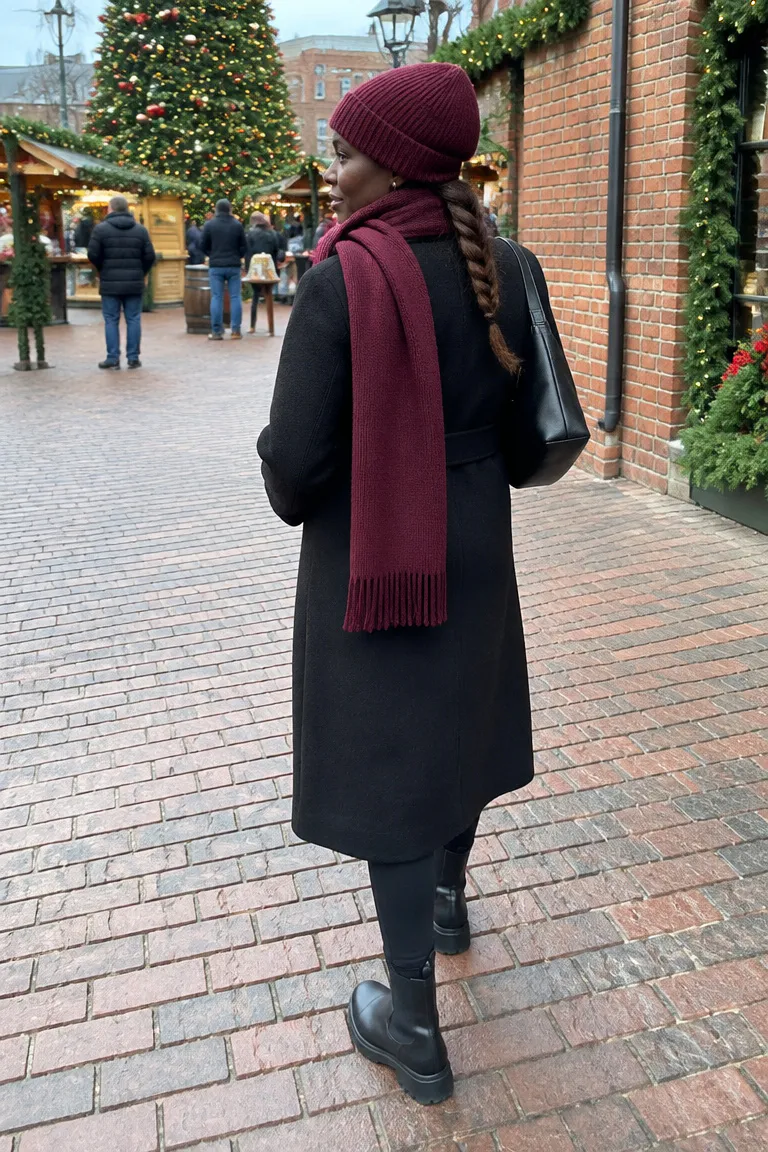
- Best for: Anyone adding polish to a simple coat-and-jeans outfit, or planning for photos where the head and neck are the focus.
- Wear it with: A ribbed wool beanie or ear-covering headband and a long wool scarf in the same color, a neutral coat in black or camel, and a plain knit underneath.
- Fit check: The hat should cover the tops of your ears and sit snug but not tight at the forehead. If you want to protect your hair, use an ear-covering headband or a satin-lined hat. A scarf wrapped once at the neck and tucked into the coat won’t catch on a mug.
- Weather swap: In wind, wrap the scarf twice or swap to a neck gaiter. In mild weather, drop the scarf and keep the headband.
A hat and scarf in one color look planned even when the rest of the outfit is a plain coat and jeans. Burgundy against black or camel gives a clear contrast, and a ribbed beanie with a short-fringed scarf shares a texture, which helps them read as a set.
The hat’s real job is covering your ears. Pull it down over the tops and leave only the forehead edge showing. If flattened hair bothers you, an ear-covering headband or a satin-lined hat leaves the crown alone.
Treat the scarf as a working piece: one loop at the neck, tucked into the coat, so the ends stay out of your mug and your plate. If photos are part of the plan, the head and neck fill the frame, which makes this the place to spend on color.
10. Crossbody Bag and Touchscreen Gloves
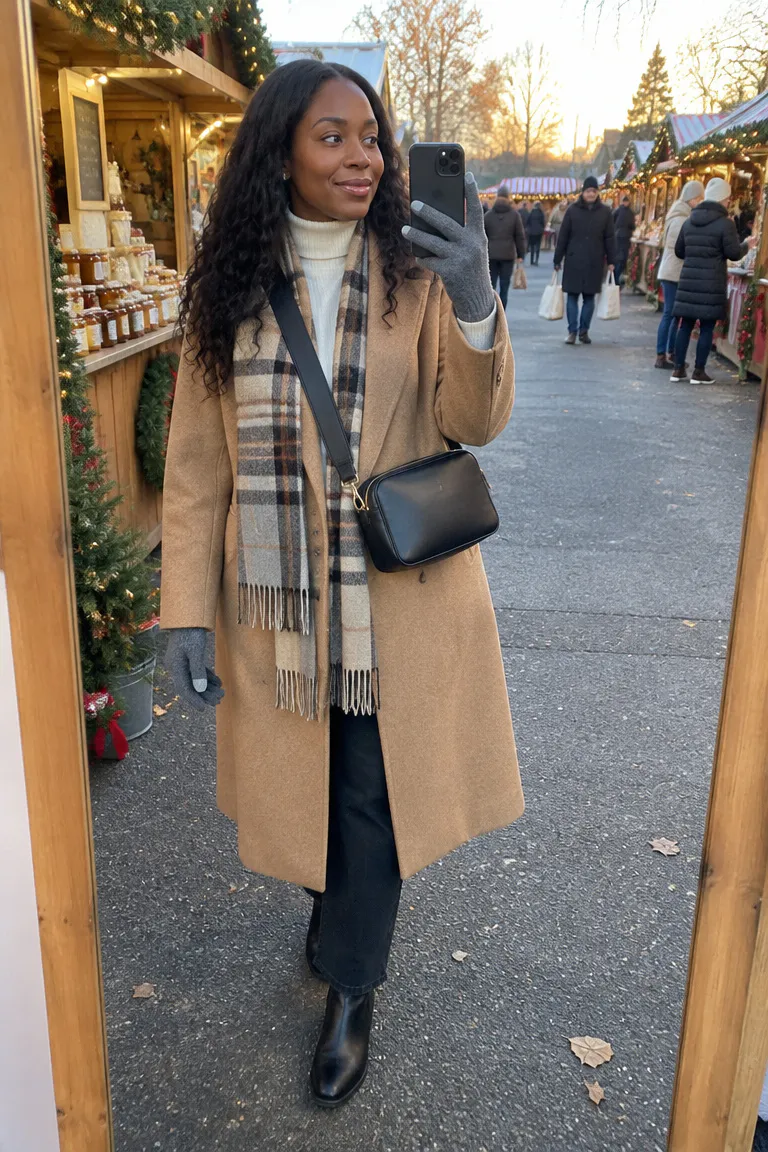
- Best for: Shoppers with their hands full, anyone with kids along, and crowded stalls where a zip closure is a mild precaution.
- Wear it with: A zip-top crossbody in leather or nylon, touchscreen-compatible knit gloves, a coat with a hood, and a simple knit and jeans so the bag stays visible.
- Fit check: The strap should be long enough to sit the bag at the hip under an open coat and short enough that it doesn’t bounce. Gloves must let you grip a mug handle and tap a phone without removing them.
- Weather swap: If it’s snowing, switch to a water-resistant nylon bag. In very cold weather, wear a thin touchscreen liner under mittens.
With a mug in one hand and a shopping bag in the other, you need a bag that stays put without a hand on it. A zip-top crossbody in leather or nylon does that, and the zip is a mild precaution in crowded stalls. Wear the strap under an open coat with the bag at the front: it won’t slide off slick puffer fabric, and you can see it.
Gloves matter as much. Touchscreen knit gloves let you pay or take a photo without pulling one off, and the fingertip patches shouldn’t stop you gripping a mug handle. Pack the bag like this:
- Phone and card in the main compartment.
- Small bills and coins in an inner zip pocket, since some stalls may take cash only.
- Tissues and lip balm in the outer pocket, where you can reach them one-handed.
11. Thrifted Wool Coat Budget Look
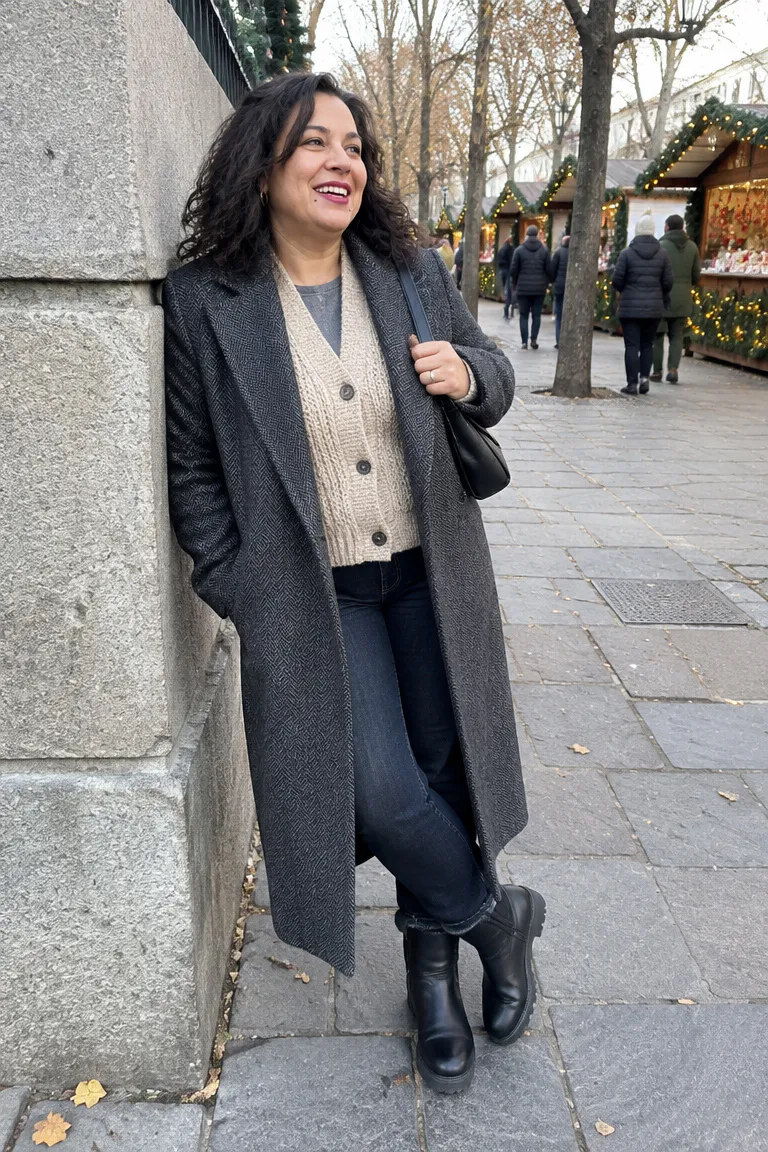
- Best for: Readers building a market outfit without buying much new, or those who need warmth more than a new coat.
- Wear it with: A secondhand wool overcoat, a thermal top and a chunky cardigan or two sweaters, wool-blend socks, boot insoles, and jeans over fleece-lined leggings.
- Fit check: Check a thrifted coat for lining, intact seams, and sleeve length over a sweater. Make sure the coat closes over two layers. If it doesn’t, size up rather than skipping layers.
- Weather swap: If the coat isn’t water-resistant, treat it with a spray or add a hooded shell. If it’s very cold, layer the second sweater and add a scarf rather than replacing the coat.
Spend in this order: boots and socks first, then the coat, then everything else. Several of the warmest pieces cost very little, and they often do more than a new coat would.
- Thermal top and fleece-lined tights: inexpensive, and warmer than a thicker sweater.
- Wool-blend socks and boot insoles: cheap upgrades for boots you already own.
- Secondhand wool overcoat: check the lining and seams before you pay.
- A second sweater: layer two before you buy a new coat.
A charcoal herringbone overcoat goes with nearly any knit, and an oatmeal cardigan over a gray thermal top gives the neckline a neat, layered look. Thrifted coats often run snug, so try yours on over the exact cardigan you plan to wear.
12. Waterproof Sneakers for Mild Days
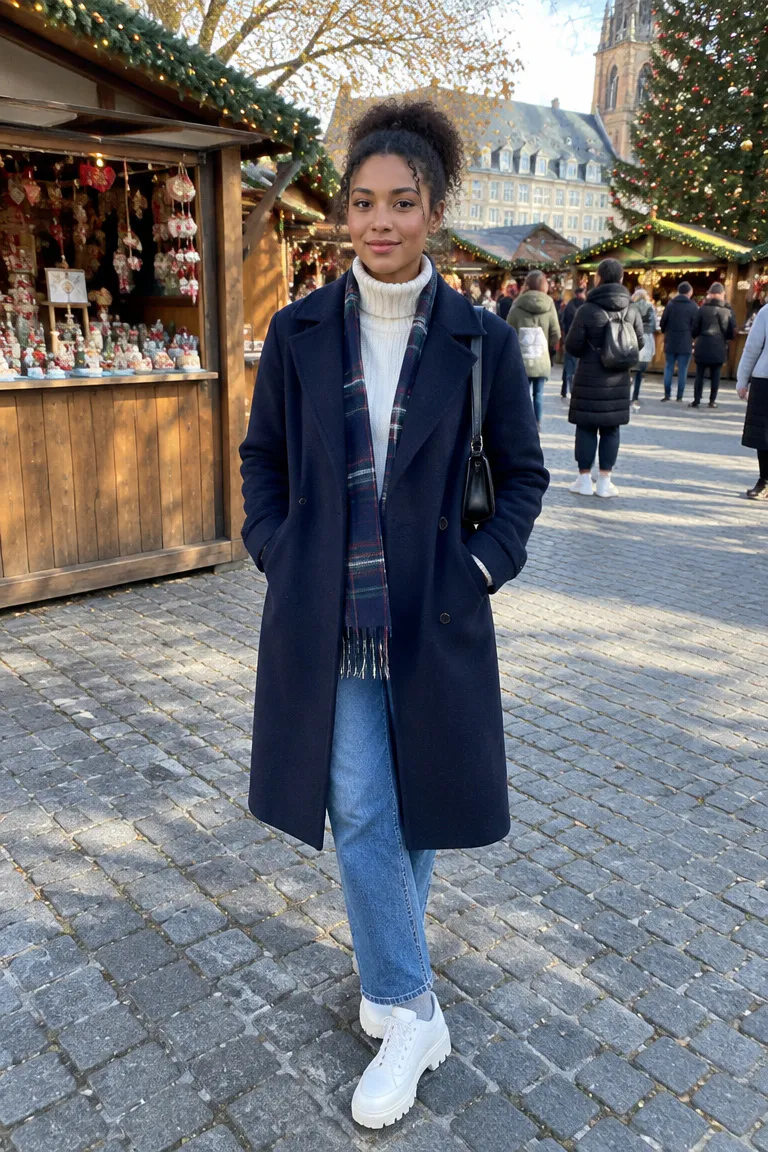
- Best for: Mild daytime strolls with a lot of walking and little standing, when boots feel too heavy.
- Wear it with: Waterproof leather or treated sneakers with grippy soles, wool-blend socks, straight-leg jeans, a mid-weight wool coat, and a lightweight scarf.
- Fit check: Sneakers need a thick enough sole to keep cold ground off your feet and enough room for a wool sock. Avoid canvas or mesh. Check the tread pattern on a wet surface before wearing them all day.
- Weather swap: If temperatures drop below about 40 F or slush is forecast, switch to insulated boots. If it rains, add a hood or compact umbrella.
Sneakers are the exception to the boot rule, and only on a mild afternoon in the 40s to 50s F when you’re walking more than standing. After a few miles of old-town streets, boots can feel heavy, and a waterproof sneaker with a thick sole weighs less.
They fail in three ways: smooth soles slide on wet stone, thin soles pass the cold up from the ground, and canvas or mesh uppers soak through. A leather upper, a gusseted tongue, and a lugged rubber sole avoid all three. Pair them with wool-blend socks and a mid-weight coat.
Test before you go: Walk a wet sidewalk or a damp tiled entry in the sneakers before the trip. If the sole slips there, it will slip on cobblestones.
13. Velvet Details for Dinner After
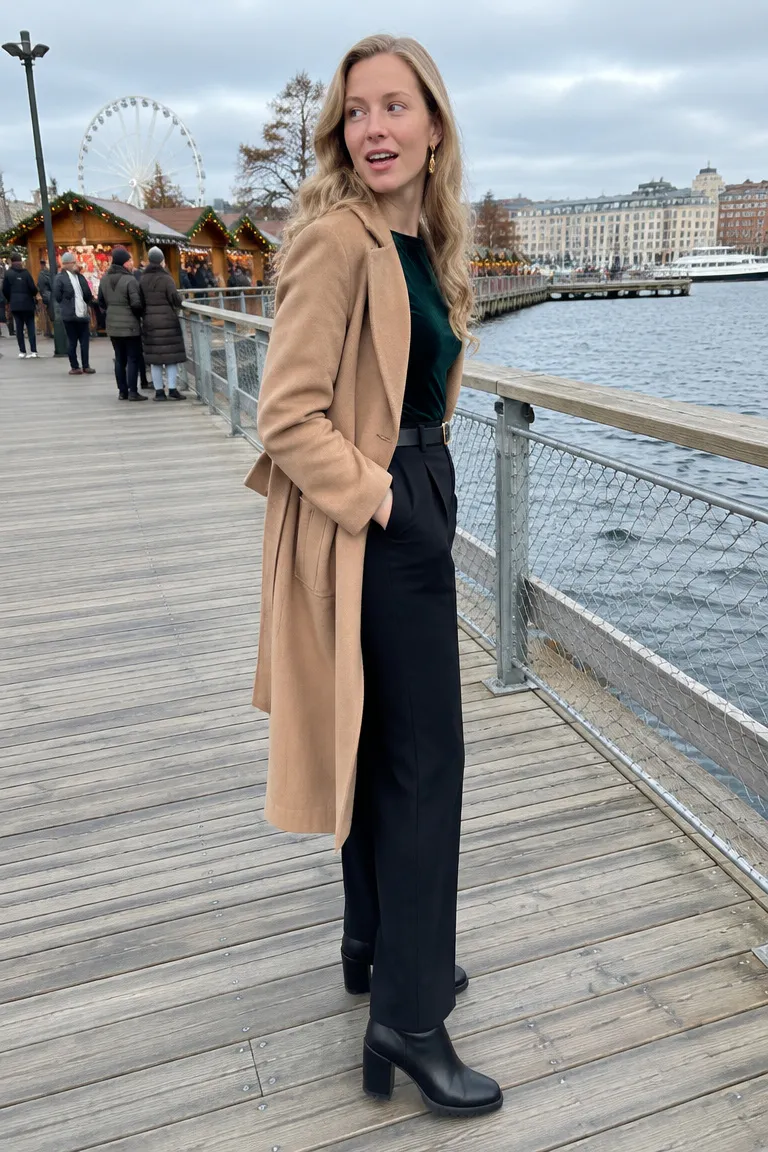
- Best for: Dinner, a concert, or a stop in a restaurant after the market, where you want a step up without losing warmth.
- Wear it with: A velvet or satin blouse over a thin thermal base, dark trousers or a midi skirt over fleece-lined tights, a belted wool coat, statement earrings, and grippy ankle boots. Pack sock booties or loafers if you’re changing.
- Fit check: A thin thermal under a velvet top shouldn’t show at the neckline; pick a scoop or boat neck base. Place the belt at the waist over the coat. Ankle boots should have a stable block heel with tread.
- Weather swap: If it’s snowing, wear insulated boots to dinner and change inside. In rain, a hooded coat keeps velvet dry.
One dressier piece on a warm base is enough: an emerald velvet blouse over a thin thermal, black trousers, and a belted camel coat. A boat or scoop neckline on the thermal keeps it from showing at the collar.
Earrings add polish without taking up bag space. A beanie will cover short studs outdoors, so choose drop earrings that hang below the brim. A crossbody strap can flatten velvet at the shoulder, so carry a small clutch for the evening.
If you’re changing for dinner, pack sock booties or loafers in a bag and swap them in the restaurant entry. For more velvet options, including midi dresses and blazers, see these velvet holiday outfits for women.
14. Four-Sweater Carry-On Capsule
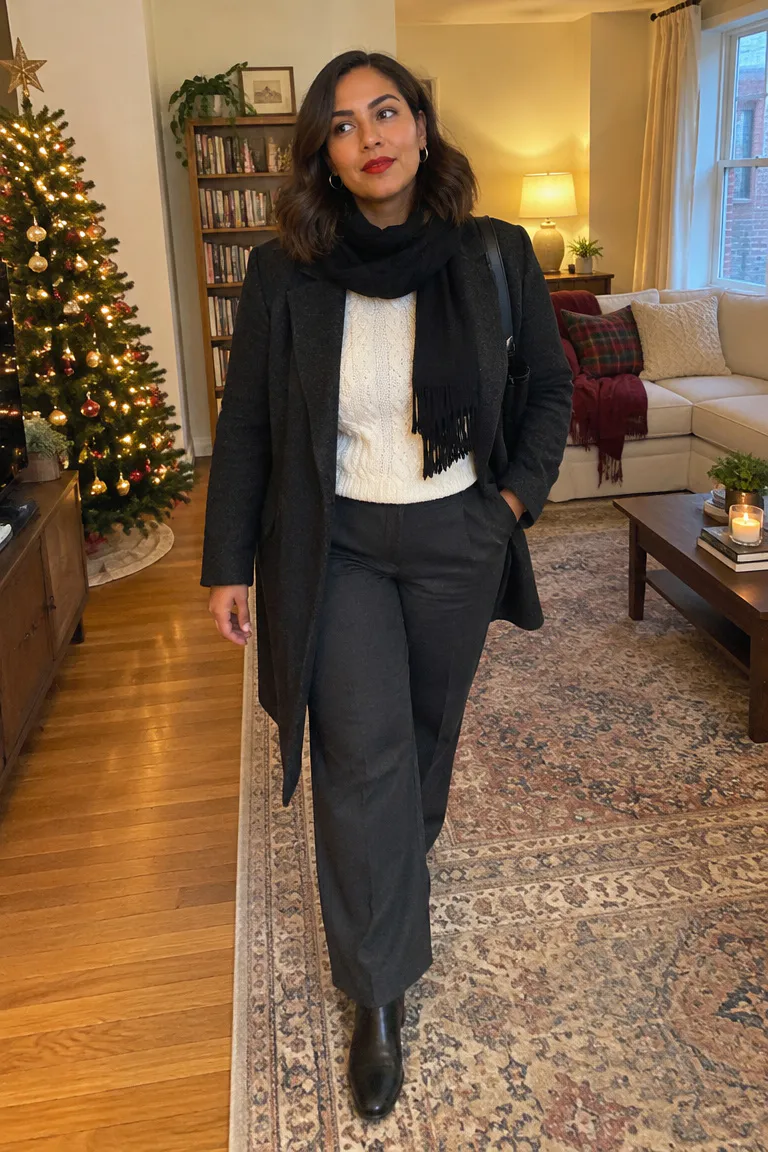
- Best for: US travelers packing a carry-on for a European market trip with a mix of cold, dry, and damp days.
- Wear it with: Four sweaters in complementary colors, three bottoms (jeans, wool trousers, a skirt), one knit dress, a waterproof coat with a hood, insulated boots, and a dressier second shoe like loafers.
- Fit check: Wear the bulkiest items (coat, boots) on the plane to save bag space. Make sure every sweater fits comfortably over a thermal top. Check that the shoes work with both tights and trousers.
- Weather swap: For a colder forecast, swap one sweater for a fleece and add thermal leggings. For rain, add a compact umbrella and a waterproof layer.
A carry-on capsule needs four sweaters, three bottoms, one knit dress, one coat, and two pairs of shoes. Sweaters in cream, charcoal, burgundy, and forest green all pair with every bottom, so four sweaters and three bottoms make twelve outfits before you count the dress.
- Bottoms: dark jeans, wool trousers, and a midi skirt to wear over fleece-lined tights.
- Coat: hooded and waterproof, so one layer covers damp days and wind.
- Shoes: insulated boots for market hours, loafers for dinner.
- Small items: a scarf, a beanie, and touchscreen gloves.
If the trip adds a stretch in Scotland, these Scotland Highlands travel outfits for cold days show how to handle damp, cold weather with the same kind of layers.
Packing note: Wear the coat and boots on the plane. Stuff the loafers with socks and the rolled scarf so they don’t take up empty space.
Pre-Departure Check
The day before you leave, wear the boots, socks, and coat outside for fifteen minutes and stand still. If your feet or hands get cold first, fix that before adding anything else, then pack the swap that matches your forecast.